

Quick Answer
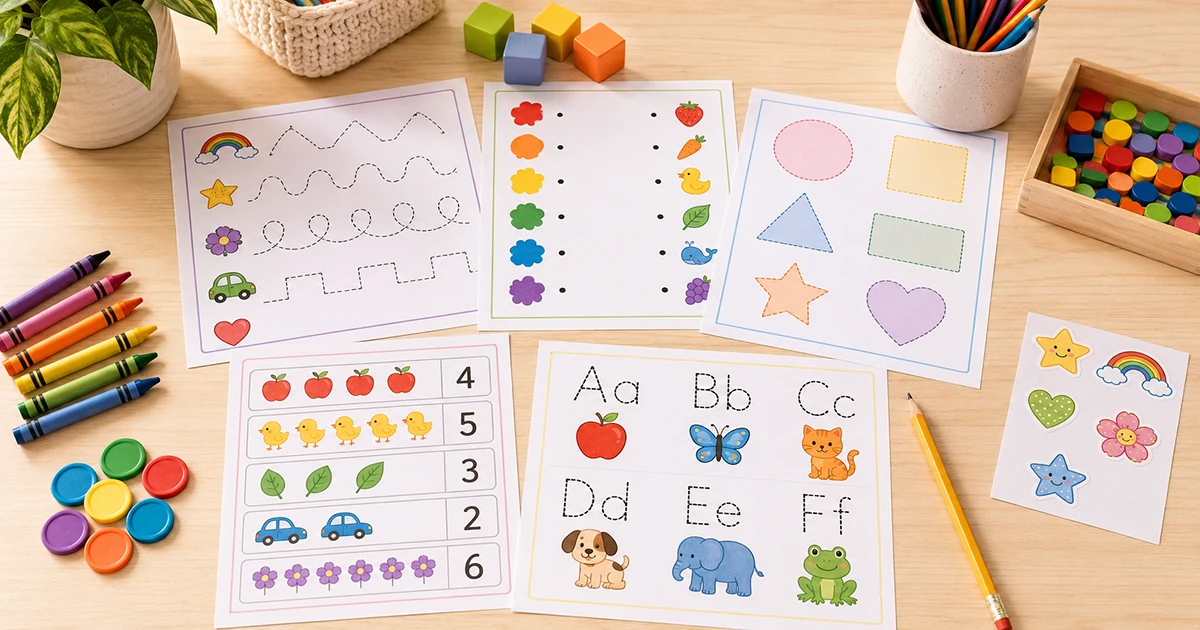
If you feel unsure about which worksheet to choose first, start with one short page that matches your child’s current skill. Printable preschool worksheets work best when each page has one simple goal, such as line tracing, color recognition, shape recognition, counting practice, letter recognition, or picture-based learning.
For most preschool children, 5 to 10 minutes is enough. Use worksheets as a small part of learning, along with play, talking, movement, and hands-on activities.
Table of Contents
- What Should Preschool Children Learn Before Formal School?
- Are Printable Preschool Worksheets Actually Helpful?
- How to Choose the Right Preschool Worksheet for Your Child
- Which Preschool Worksheets Should You Use and When?
- Should You Start With Tracing, Colors, or Matching?
- How Long Should Preschool Children Use Worksheets?
- How to Use Worksheets Without Making Learning Boring?
- What Common Mistakes Should Parents Avoid When Choosing Preschool Worksheets?
- Simple Preschool Worksheet Resources to Explore
- Final Thoughts
- Frequently Asked Questions
What Should Preschool Children Learn Before Formal School?
Preschool learning is much bigger than ABC and numbers. Children build language, thinking, movement, listening, confidence, and early problem-solving skills together. A worksheet helps when it matches the child’s age and readiness.
Language and early literacy
Early literacy starts with naming pictures, listening to sounds, recognizing letters, following simple instructions, and building vocabulary. A child may not write letters yet, but they may enjoy matching letters or pointing to familiar objects.
Fine motor and pre-writing skills
Before children write letters, they first learn how to control small hand movements. Tracing lines, coloring simple shapes, and following paths help build pencil control in a gentle way. Our guide on tracing worksheets for early learning explains this in more detail.
Colors, shapes, and early math thinking
Colors, shapes, matching, sorting, counting, and grouping are important preschool learning areas. A child may sort toys by color, count spoons, or compare big and small objects. Small daily activities like these build early math thinking.
Are Printable Preschool Worksheets Actually Helpful?
Yes, printable preschool worksheets can help as short, gentle practice. They work best as one small part of your child’s daily routine, along with play, stories, art, movement, real-life examples, and simple conversation.
The key is balance. A worksheet should help your child practice one skill, not turn learning into long study time.
When worksheets help
Worksheets help when they focus on one clear skill. A tracing page can support pre-writing skills. A color-matching page can build visual recognition. A counting page can connect numbers with objects.
When worksheets become too much
Worksheets become too much when the page is crowded, the skill is too hard, or sitting time gets too long. If your child loses interest quickly, choose a shorter, easier, or more playful activity.
Actionable Tip: Start with half a worksheet. If your child stays happy and focused, continue. If attention drops, stop and move to sorting crayons, counting toys, or naming pictures.
How to Choose the Right Preschool Worksheet for Your Child
The best worksheet is not always the prettiest one. Choose a page your child can understand and try with gentle support.
Start with one skill at a time
Choose one learning goal per activity. A child may trace lines today, match colors tomorrow, and count objects another day. Mixing too many skills on one page can confuse preschool children. One page should have one clear job.
Choose simple pages with clear visuals
Preschool worksheets should feel clear, not empty or overcrowded. Too many boxes, objects, or steps can confuse children. A good worksheet uses a simple layout, clear images, and comfortable space for tracing, coloring, or matching.
Match the worksheet to your child’s current stage
A 3-year-old may enjoy tracing lines, coloring shapes, or matching pictures. A 4 or 5-year-old may be ready for letter tracing, number recognition, simple counting, sorting, and basic writing patterns. Readiness matters more than age alone.
Use a quick page check
Before choosing a worksheet, check that it has one main skill, clear images, simple instructions, and enough space for the activity.
Actionable Tip: Ask yourself, “Can my child understand what to do without a long explanation?” If the page needs too much explaining, choose a simpler one.
Which Preschool Worksheets Should You Use and When?
Start with the learning need first, then choose a page that supports it. Tracing is useful, but preschool children also need colors, shapes, matching activities, numbers, letters, vocabulary, and playful practice.
Tracing worksheets for pencil control
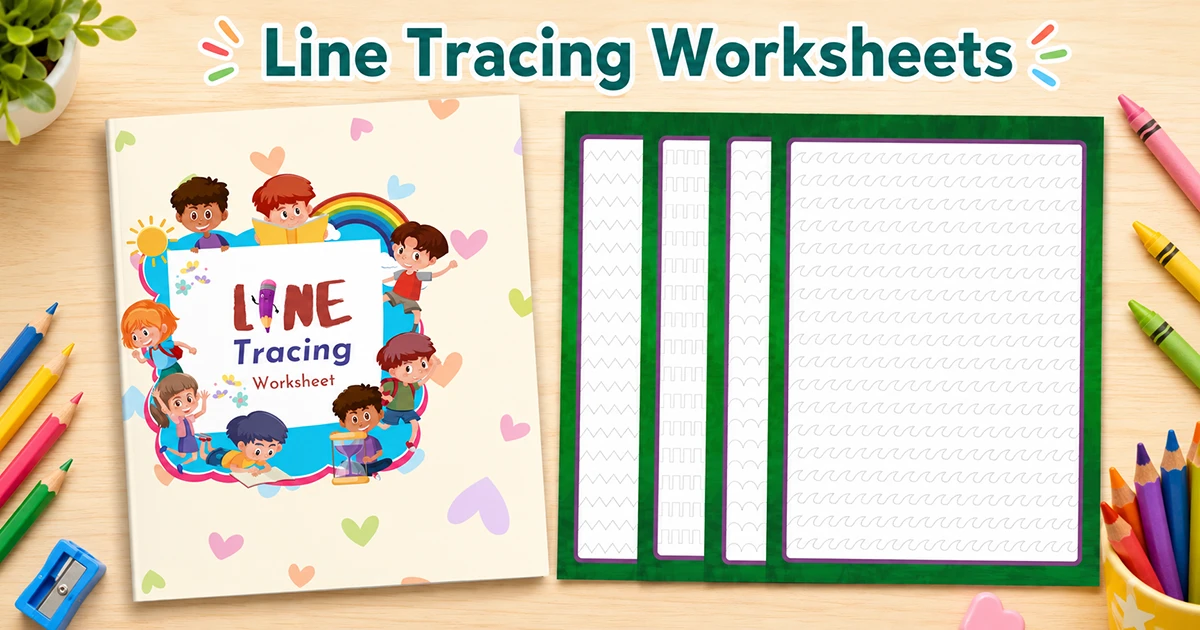
Tracing worksheets are useful when a child is getting ready to write. Straight lines, curves, zigzags, circles, and simple paths help children control hand movement. A beginner resource like line tracing worksheets for early pencil control can support short, focused practice.
Color and shape worksheets for recognition
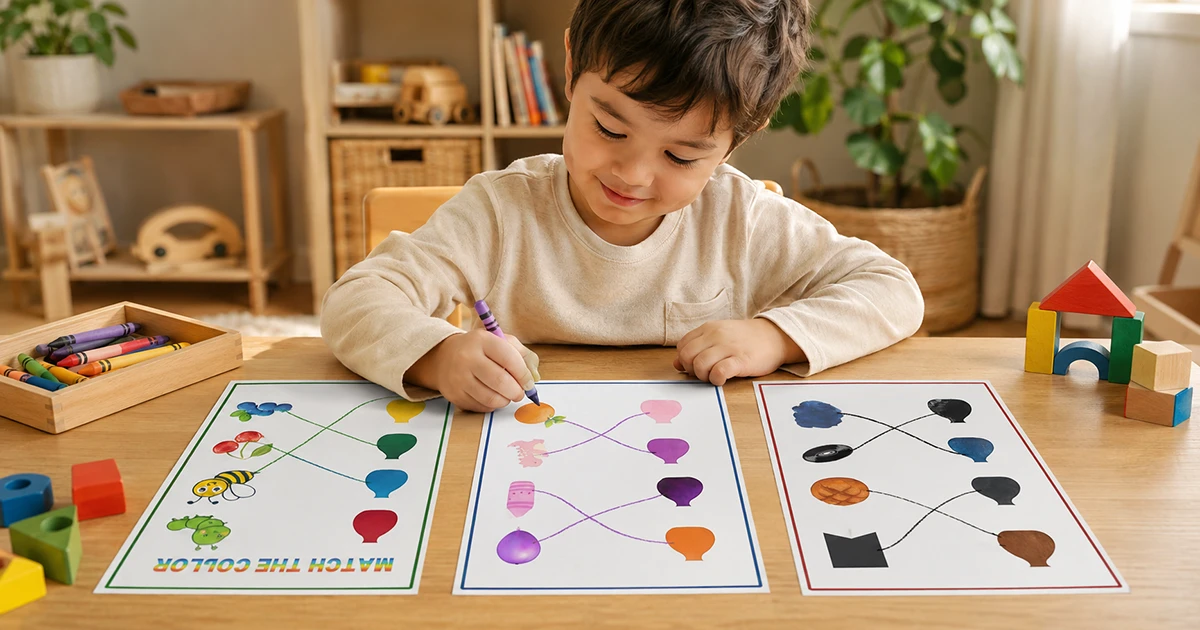
Color and shape pages help children notice patterns, compare objects, and describe what they see. Matching colors, sorting objects, and finding shapes can build visual discrimination and early thinking skills. A playful color matching activity for preschool kids can make this practice feel more like a game.
Alphabet and number worksheets for early readiness
Alphabet and number worksheets should stay simple in preschool. Letter recognition, number recognition, counting objects, and tracing numbers are enough for many children. Our guide on alphabet and number tracing worksheets can help you use them without rushing.
Everyday picture worksheets for vocabulary
Preschool children learn many new words from everyday topics like animals, birds, body parts, transport, food, family, weather, and nature. Picture-based worksheets help them name what they see and connect those words with real life.
Should You Start With Tracing, Colors, or Matching?
No single starting point works for every child. Choose based on interest and current skill.
If your child enjoys crayons and lines, start with tracing. If your child notices colors and objects, start with color recognition, matching, and sorting activities. If your child enjoys counting toys, start with counting and number recognition.
A balanced week can include one tracing page, one color or shape activity, one counting activity, and one picture vocabulary activity.
Actionable Tip: After a color page, ask your child to find three red things in the room. After tracing a line, ask them to draw the same line in the air with a finger.
How Long Should Preschool Children Use Worksheets?
Preschool worksheet time should stay short. Many children do well with 5 to 10 minutes. Some finish one small page, and some complete only half. Both are fine.
For 3-year-olds: Keep worksheet time very short
For many 3-year-olds, one short activity is enough. Choose simple tracing, color matching, picture naming, or sorting. Avoid long writing practice at this age.
For 4 and 5-year-olds: Add practice slowly
Many 4 and 5-year-olds can handle slightly longer practice when the page is clear and familiar. They may try letter recognition, number tracing, counting, shapes, matching, and early writing patterns.
Actionable Tip: End the activity while your child is still calm and interested. A short happy practice is better than a full page finished with stress.
How to Use Worksheets Without Making Learning Boring
A worksheet becomes more useful when an adult turns it into a small learning moment. Sitting quietly with a page is not the only way to learn.
Talk about the worksheet while your child works
Try a small conversation. If the worksheet shows apples, ask, “How many apples do you see?” If the page has colors, ask, “Can you find another green thing near us?” Simple talking helps your child stay involved.
Use crayons, counters, and real objects to make practice playful
You can make worksheet time easier by using real objects first. Count buttons before a number worksheet, sort toy cars before a color-matching page, or trace a line with a finger before using a pencil. This hands-on learning helps children understand the activity first.
Pause when your child needs a break
Worksheet time should feel calm and short. If your child starts rushing, scribbling, or looking away, pause the activity. Try again later with a shorter or easier page.
Actionable Tip: After one short worksheet, let your child choose a sticker or color a star. Keep it simple, and praise the effort, not just the result.
What Common Mistakes Should Parents Avoid When Choosing Preschool Worksheets?
Small changes can make worksheet time calmer.
Using too many worksheets in one sitting
More pages do not mean better learning. Preschool children need short practice and lots of play. One meaningful page is better than five rushed pages.
Choosing pages that are too advanced for your child
Some worksheets look impressive because they have more writing or more questions. But if your child does not understand the task, that page will not help much. Choose an easier page first, then move to harder activities when your child feels ready.
Focusing only on correct answers
Preschool worksheets are not only about getting the right answer. Your child may also be practicing how to hold a crayon, follow a simple instruction, notice a shape, or try again after a small mistake.
Skipping play-based learning
Worksheets should not replace blocks, drawing, stories, music, outdoor play, pretend play, or conversation. Preschool children learn deeply when they move, talk, and explore.
Simple Preschool Worksheet Resources to Explore
Start with one learning area at a time. Pick the skill your child needs right now, such as tracing, colors, counting, or letter recognition. Once that skill feels easier, you can add another activity.
You can browse printable educational templates for early learning and choose pages that match your child’s current stage.
For a broader age-based view, read our complete printable worksheets guide for kids. You can also use our colors and shapes printable worksheets guide for color and shape practice.
Final Thoughts
The right preschool worksheet should feel simple, warm, and doable. Choose one skill at a time, keep practice short, and connect each page with playful learning. Simple worksheets can support curiosity, pencil control, color recognition, matching, and counting. This makes early learning at home feel calmer for both the child and the adult.
FAQ
For preschool children, the best worksheets are usually the ones that feel simple and easy to try. Start with one small skill at a time, such as line tracing, color matching, shape recognition, counting objects, letter recognition, or simple picture vocabulary.
Yes, printable preschool worksheets can be useful for home learning when you keep them short and simple. Use one page to practice one skill, then connect it with play, stories, talking, movement, or real objects at home.
There is no one right choice. Start with the activity your child finds easiest right now. Choose tracing if your child enjoys crayons and simple lines. Choose colors or matching if your child enjoys naming colors, sorting toys, or finding similar objects.
One short worksheet is enough for most preschool children, especially at home. Younger preschoolers may only finish half a page, and that is okay. Watch your child’s attention, comfort, and mood instead of trying to complete a fixed number of pages.
Avoid pages that feel too crowded or ask your child to do too much at once. Choose simple worksheets with one clear skill, easy visuals, and comfortable space for tracing, coloring, or matching.