

Quick Answer
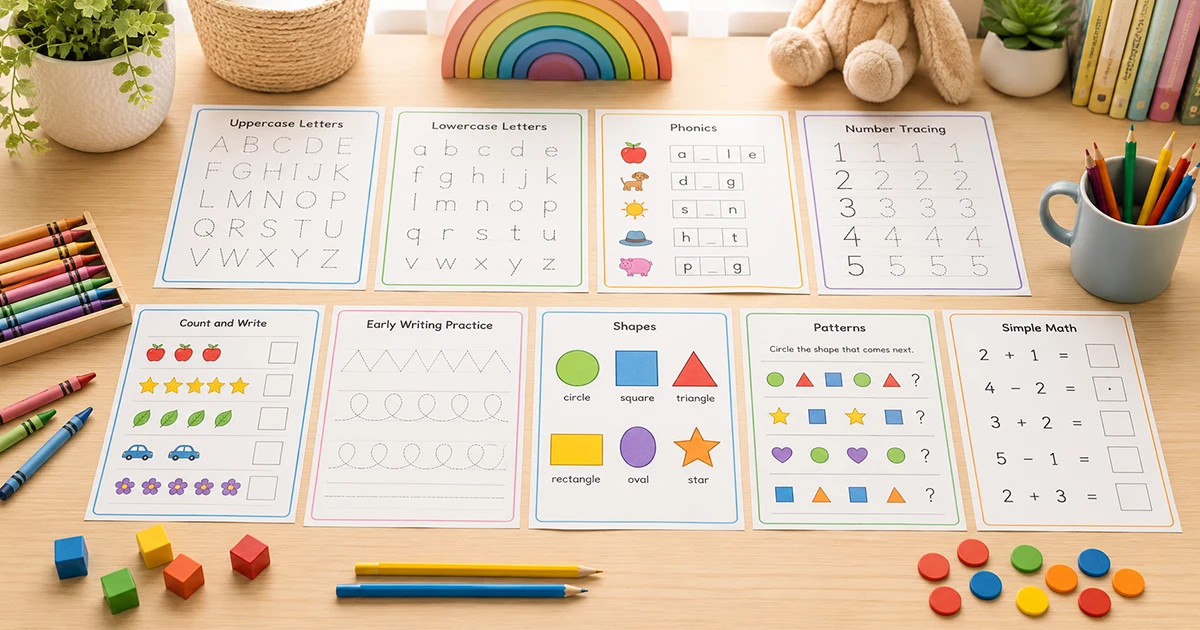
If your child is in kindergarten, choose short worksheets that practice one skill at a time. Printable worksheets for kindergarten can support letters, sounds, numbers, writing, shapes, patterns, and early math when the page is clear and easy to follow.
At home, one focused page is often enough. The aim is simple practice, not more pages.
Table of Contents
- What Skills Should Kindergarten Worksheets Help Children Practice at Home?
- Are Printable Worksheets for Kindergarten Helpful for Home Practice?
- How to Choose Kindergarten Worksheets That Match Your Child’s Learning Need
- Best Printable Worksheets for Kindergarten Home Practice
- How Many Kindergarten Worksheets Should Kids Do at Home?
- How to Make Kindergarten Worksheets Fun Instead of Stressful
- Helpful Kindergarten Worksheet Resources to Explore
- Final Thoughts
- Frequently Asked Questions
What Skills Should Kindergarten Worksheets Help Children Practice at Home?
Kindergarten children start connecting letters with sounds, numbers with quantities, and written marks with meaning. Good kindergarten learning worksheets for kids should support these skills in a simple way. For many children, kindergarten worksheets for letters and numbers are the most useful starting point.
Letter recognition and letter sounds for reading readiness
Kindergarten children need simple practice with letters and sounds. Start with uppercase and lowercase letters, beginning sounds, and picture words. A page where a child matches A with apple or fills a missing letter can build letter recognition and letter sounds without making reading practice feel difficult.
For early reading, the child should also say the sound, name the picture, and connect the letter with a familiar word. This builds reading readiness in a simple way.
Number recognition and counting for early math
Math practice often starts with counting objects, recognizing numbers, tracing numbers, comparing quantities, and filling missing numbers. Simple kindergarten number tracing worksheets help children connect number shapes with real amounts.
A child may count apples, trace the number 5, or match objects with the correct number. These small tasks support number recognition, number tracing, counting practice, and early math.
Handwriting and pencil control for writing practice
Kindergarten children are still building hand strength, grip control, and confidence with pencils. Kindergarten writing practice worksheets can help when pages are short and clear. Letter tracing, number tracing, simple words, and line practice support handwriting practice, pencil control, and fine motor skills.
Start with tracing, move to copying, and let independent writing come later as confidence grows.
Shapes, patterns, and matching for problem solving
Worksheets for shapes, patterns, matching activities, and sorting help children compare what they see. A child may circle the next shape, match two similar pictures, or sort objects by color or shape.
These skills support early thinking and classroom readiness.
Are Printable Worksheets for Kindergarten Helpful for Home Practice?
Yes, printable worksheets for kindergarten can help when you use them as short practice, not long study time. They work best with play, reading aloud, real objects, conversation, and hands on learning.
When worksheets help kindergarten children
Worksheets help when each page has one clear goal. One page can focus on beginning sounds. Another can focus on counting objects or writing numbers.
Printable pages also help parents create a simple routine. You can print at home, use one page after school, and repeat a skill without planning a full lesson.
When worksheets can feel too much
Worksheets can feel too much when the child is tired, the page has too many steps, or the activity is too hard. Signs may include rushing, guessing, scribbling, or refusing to continue.
If your child looks confused, pause the page. Read the instruction aloud, do the first example together, or practice the same skill with blocks, crayons, picture cards, or a quick matching game.
How to Choose Kindergarten Worksheets That Match Your Child’s Learning Need
Many parents search for how to choose kindergarten worksheets because pages can look similar, but the difficulty can be very different. Some ask for simple matching. Others expect reading, writing, or multi step thinking.
Choose by skill, not only by grade
The word kindergarten does not always mean the page is right for your child. Choose by the skill your child needs now.
If your child knows letters but struggles with sounds, choose kindergarten phonics worksheets printable pages. If your child counts aloud but does not recognize written numbers, choose number recognition pages. If writing feels difficult, choose tracing first.
Pick one clear task per page
A good worksheet has one clear task, like letter sounds, number tracing, shapes, or patterns. Crowded pages can confuse children because they ask for too many skills at once.
Use worksheets that are easy to understand at first look
A kindergartener should understand the basic task with a little help. Simple visuals, clear spacing, and short instructions make the page easier to start.
If your child needs a long explanation, choose an easier page.
Best Printable Worksheets for Kindergarten Skills at Home
Parents often want kindergarten worksheets to print at home because a ready page saves time. Many parents also look for printable kindergarten worksheets for home practice that cover reading, writing, and math without a full lesson plan. The best choice depends on the skill your child needs.
Alphabet and phonics worksheets for letter sounds
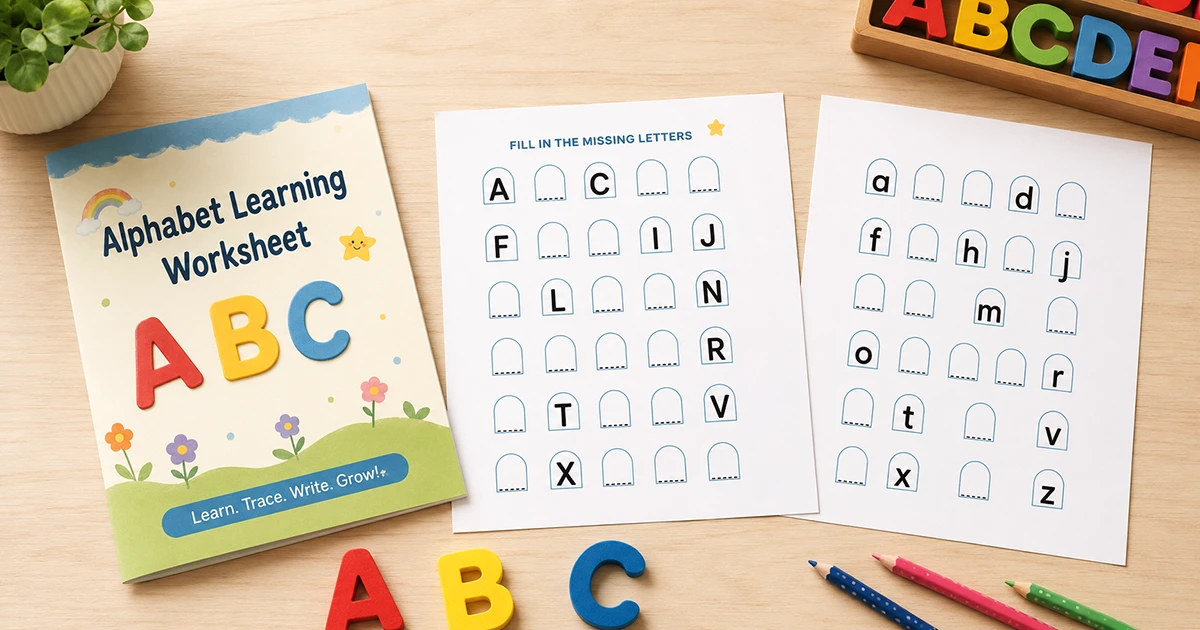
Alphabet pages help with letter recognition, beginning sounds, picture words, and early phonics. Kindergarten worksheets for reading readiness should help children notice letters, sounds, and simple words.
Once your child knows a few letters, Missing Letters Alphabet Worksheet can help them practice letter order and alphabet recall.
Number and counting worksheets for math confidence
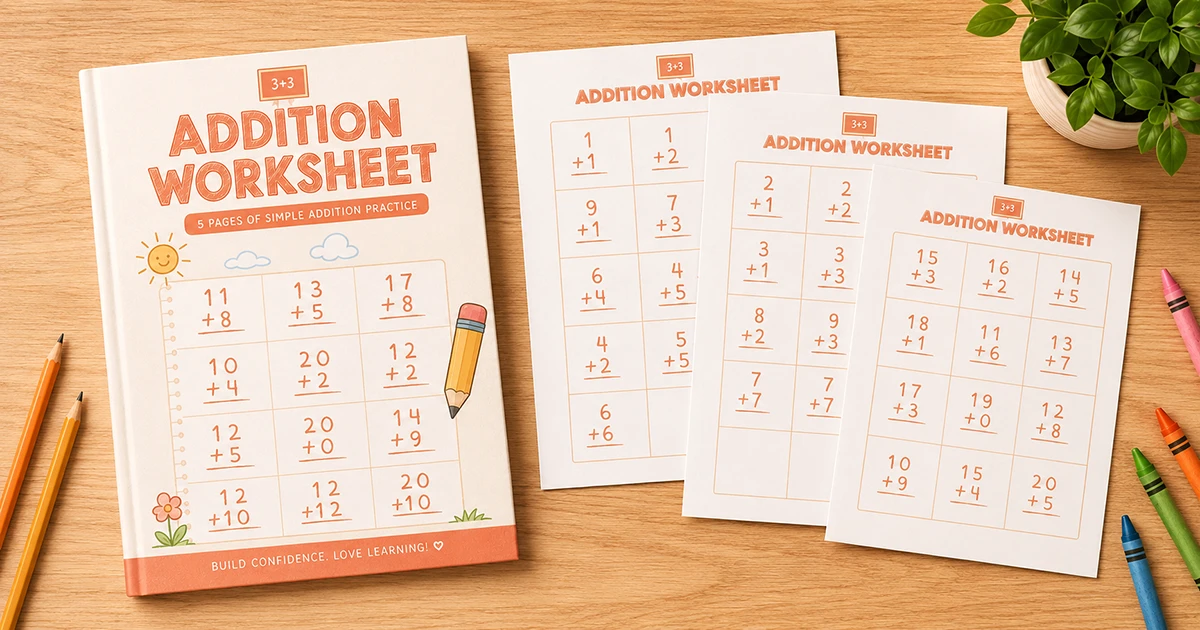
Number and counting pages should build math confidence slowly. Start with counting objects, number tracing, and missing numbers. When your child is ready, add simple addition or picture based subtraction. These kindergarten worksheets for early math skills work best when numbers feel connected to real quantities.
After counting and number order feel familiar, Printable Addition Worksheets can support simple addition practice.
Writing practice worksheets for letters, numbers, and simple words
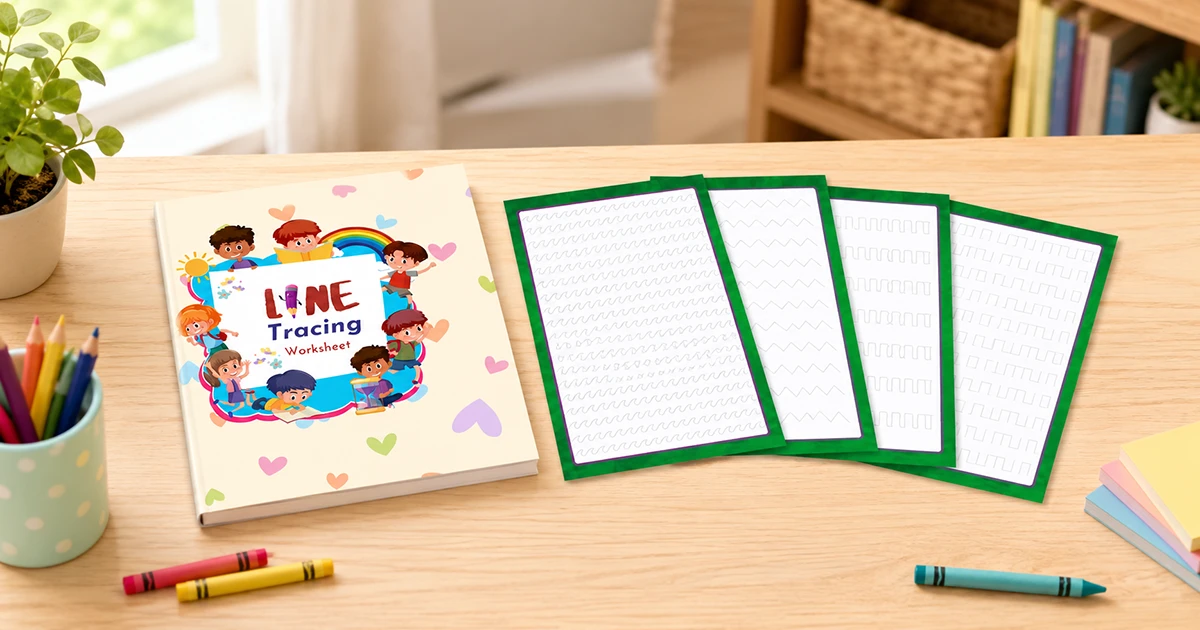
Kindergarten writing starts with small hand movements, not full sentences. Begin with lines, curves, letter formation, and number tracing before simple words.
When your child needs more control with pencil movement, Line Tracing Worksheets can support early handwriting practice. For more help, read our guide on alphabet and number tracing worksheets.
Shapes, patterns, and cut and paste worksheets for thinking skills
Shapes, patterns, matching, and cut and paste worksheets support visual thinking and fine motor practice. They are useful when children need a break from letters and numbers.
After a shape page, ask your child to find circles, squares, triangles, or rectangles around the room.
How Many Kindergarten Worksheets Should Kids Do at Home?
One or two short pages are usually enough for kindergarten home practice. The goal is steady home practice, not a pile of worksheets.
A 10 to 15 minute session is usually enough. If your child looks tired, stop and try a hands on activity instead.
How to Make Kindergarten Worksheets Fun Instead of Stressful
Parents often search for how to make kindergarten worksheets fun because children can lose interest quickly. The page matters, but the way you use it matters more.
Use crayons, counters, blocks, or small toys first
Before a number worksheet, count blocks. Before a shape worksheet, build a square or triangle with sticks. Before a phonics page, say the sound aloud and find an object that starts with that sound.
This hands on learning helps children understand the idea before writing an answer.
Talk through the worksheet in simple words
If the page has pictures, ask your child to name them. If the page has numbers, ask your child to count aloud. If the page has sight words, read the word together and use it in a short sentence.
This supports vocabulary, attention, and confidence during parent guided practice.
Praise effort, not only correct answers
Kindergarten children feel more confident when adults notice their effort, not just the final answer. Instead of only saying, “Correct,” you can gently say, “You looked carefully,” or “You tried that letter again.” Small words like these keep practice calm, especially when writing or phonics feels hard.
Stop before the child gets frustrated
End the activity while your child still feels okay. A calm five minute practice is better than a long session that ends with tears. Worksheets should support kindergarten readiness, not create pressure.
Helpful Kindergarten Worksheet Resources to Explore
Once you know the skill your child needs, choosing the right worksheet becomes easier.
For a wider view of worksheet learning by age, read the Printable Worksheets for Kids Complete Guide.
You can also browse Educational Templates when you want English, math, tracing, color recognition, and EVS style practice in one place. This helps when you need ready to download PDF worksheets for kindergarten math and English practice.
If kindergarten pages feel too hard right now, the guide on printable preschool worksheets for early learning at home can help you choose an easier starting point.
Final Thoughts
A good kindergarten worksheet should help a child practice one real skill at a time. Choose pages by skill, keep practice short, and connect worksheets with real objects or conversation.
With the right approach, printable kindergarten worksheets for home practice can support kindergarten learning at home without making home feel like a classroom.
FAQ
Good kindergarten worksheets are easy to understand and focused on one skill. Start with letters, phonics, numbers, counting, handwriting, shapes, patterns, or matching. One clear task helps the child know what to do.
Kindergarten kids can practice letter recognition, letter sounds, phonics, sight words, number recognition, counting, number tracing, writing practice, shapes, patterns, and early math. Keep practice short and connect the worksheet with play or real objects.
Yes, printable worksheets can support kindergarten learning when parents use them gently. They work best for short practice, review, and parent guided learning. They should not replace reading aloud, play, conversation, movement, or hands on learning.
One or two short worksheets are enough for many kindergarten children at home. Watch your child’s attention and mood. If the child gets tired or frustrated, stop and use a simple hands on activity instead.
Kindergarten worksheets that help with reading usually focus on letter recognition, letter sounds, phonics practice, sight words, rhyming, picture words, and simple word matching. These skills support reading readiness.
Math worksheets for kindergarten should support number recognition, counting practice, number tracing, missing numbers, shapes, patterns, addition practice, subtraction practice, and comparing groups of objects.