

Quick Answer Box
When a child refuses to do worksheets, pause and look at what feels difficult. Visual overwhelm, pencil grip fatigue, unclear instructions or worry about mistakes could all play a part. To reset learning, reduce the visible workload using a blank paper overlay, switch from standard pencils to early childhood handwriting tools like colorful markers or dot daubers, and spend 3 minutes on fine motor warmups before writing. Keeping sessions bite-sized can make practice more enjoyable and reduce homework battles.
Table of Contents
- Why Children Refuse Worksheets: Separating Can’t from Won’t
- Reduce Visual Overwhelm with the One-Line Rule
- Swap the Pencils: Move Beyond Standard Writing Tools
- Build Fine Motor Hand Strength Before Writing
- Choose Low-Pressure, Bite-Sized Educational Printables
- Quick Summary Cheat Sheet for Parents
- Frequently Asked Questions (FAQs)
- Final Thoughts
Why Children Refuse Worksheets: Separating Can’t from Won’t
It usually starts with the best intentions. You print out a neat set of activity pages, hand your child a pencil, and expect a quiet, productive 15 minutes of early learning. Instead, your child slumps in their chair, pushes the paper away, erases frantically, or flatly declares: “I’m not doing this!”
If you are wondering what to do when your child refuses worksheets, take a deep breath. You are not alone, and your child is not being difficult on purpose.
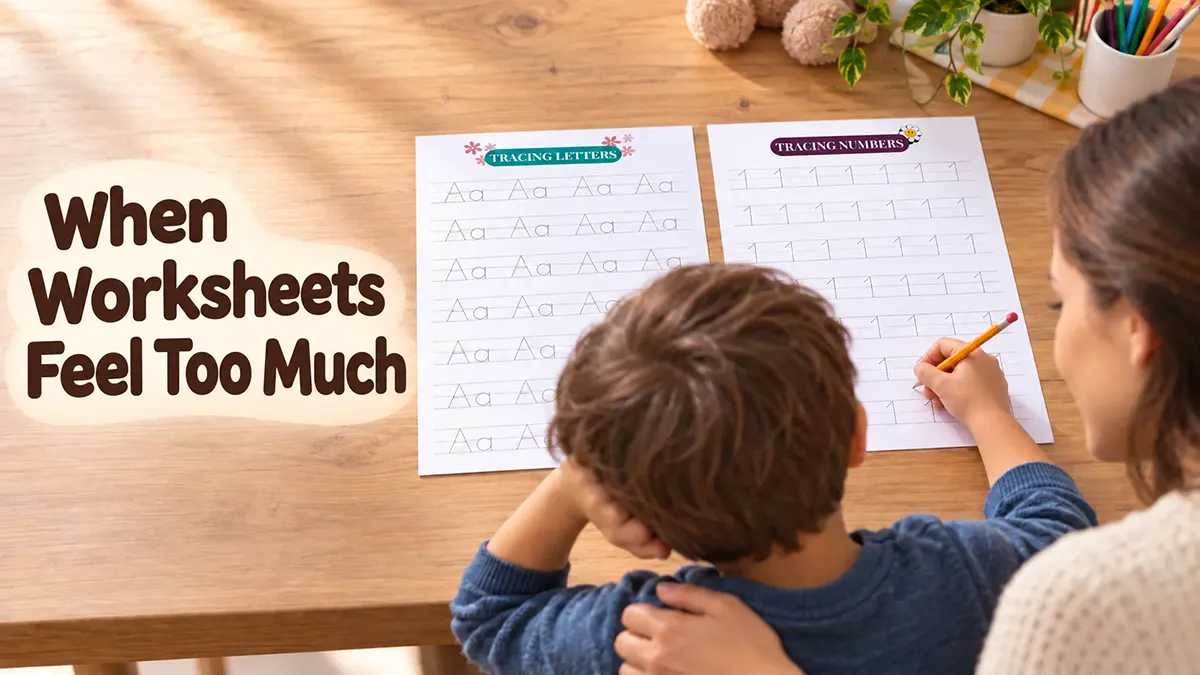
When a child refuses to do worksheets, the paper itself may not be the whole issue. Refusal can be a way of communicating that something feels difficult. Whether it is pencil grip fatigue, visual overwhelm, or fear of making a mistake, part of the task may feel too big for them to handle at that moment.
When figuring out how to help a child who resists writing, the first step is separating physical fatigue from conceptual difficulty:
- Physical Fine Motor Fatigue: A tight pencil grip can leave a child’s hand feeling tired or uncomfortable. If they complain that writing hurts, pause rather than asking them to finish the row.
- Concept Confusion: The worksheet might be pitched just slightly above their current confidence level, making them freeze out of fear.
- Visual Overwhelm: A page crowded with 20 math problems or dense rows of letters looks intimidating to a young child before their pencil even touches the paper.
Reduce Visual Overwhelm with the One-Line Rule
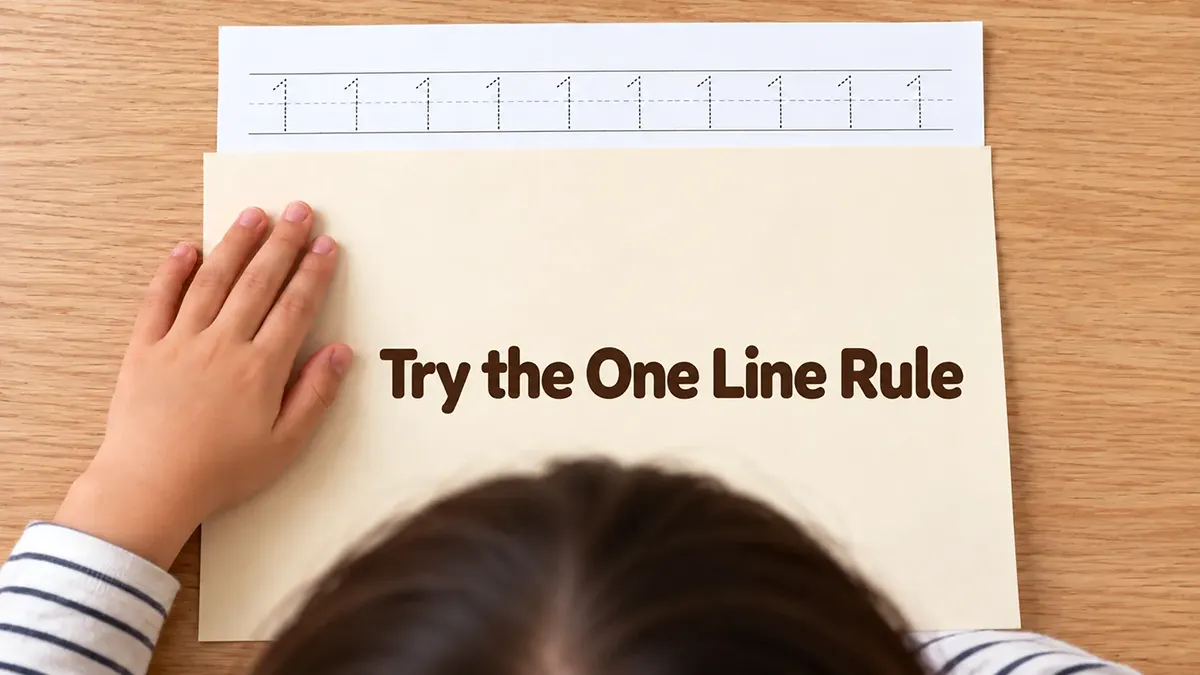
A primary reason young kids shut down when facing worksheets for kids who avoid writing is visual clutter. Seeing a full page of blank spaces makes the task feel endless.
To fix this immediately:
- The Blank Paper Overlay: Cover 80% of the worksheet with a blank piece of cardstock, revealing only one line or one problem at a time. Slide the paper down as they finish each line.
- The Two-Minute Rule: Set a timer for just two minutes. Tell your child, “We will work for two minutes, and then we are done.” Starting small lowers the barrier to entry.
- Offer Controlled Choices: Never ask, “Do you want to do your worksheet now?“ Instead, ask, “Do you want to start with the top row or the bottom row?”
Swap the Pencils: Move Beyond Standard Writing Tools
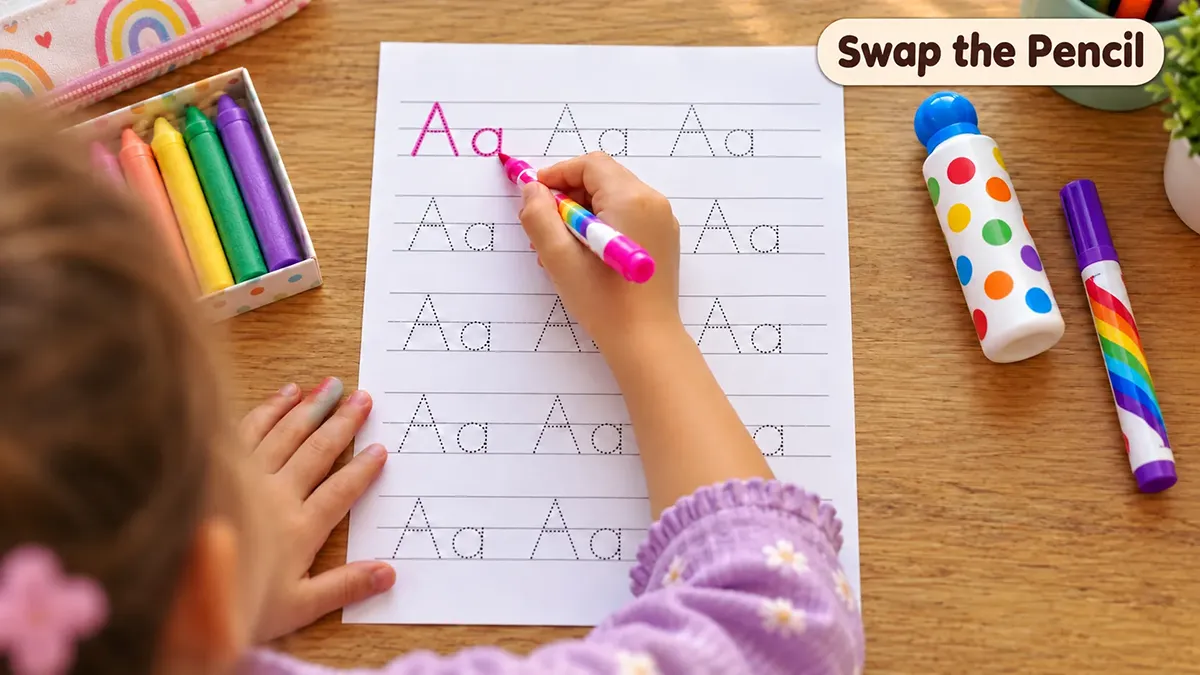
Gray lead pencils require precise grip pressure and can feel monotonous. Simply upgrading your early childhood handwriting tools can instantly turn a dry page into an inviting activity.
Instead of insisting on a traditional pencil:
- Use Rainbow Markers & Crayons: Let your child trace letters using vibrant markers or pastel crayons.
- Try Dot Markers & Stamps: For matching or counting pages, let them stamp their answers using bingo daubers instead of drawing lines.
- Incorporate Multi-Sensory Textures: Allow them to trace paths using finger paint or form letters with Wikki Stix (wax sticks) directly over the printable sheet.
Adding multi-sensory learning activities can make practice feel more playful. Choose an activity that matches what your child is learning, such as finger tracing to practise letter shapes.
Build Fine Motor Hand Strength Before Writing
If your child consistently struggles with handwriting stamina, their hand muscles may need gentle warmup time before handling a pencil.
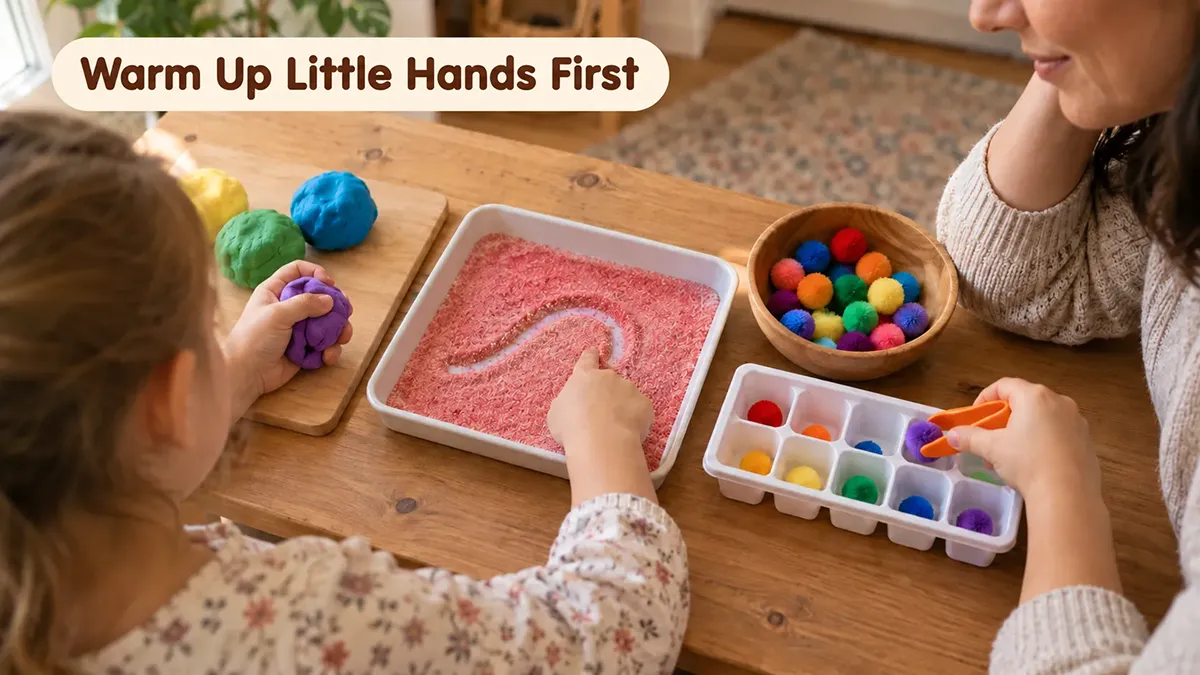
Dedicated fine motor warmups before writing prime the fingers and improve control:
- Playdough Squeezing: Roll playdough into small balls or squish it with fingers to build palm strength.
- Salt or Sand Trays: Let your child trace numbers or shapes using their index finger in a tray filled with colored salt.
- Kitchen Tong Games: Use mini tongs or tweezers to pick up pom-poms or cotton balls and place them into ice cube trays.
If you are looking for age-appropriate, low-pressure activities for toddlers and young learners, explore our full guide on Printable Worksheets for Preschool Kids.
Choose Low-Pressure, Bite-Sized Educational Printables
Not all educational activity pages are designed equal. Dense, crowded pages create friction, whereas thoughtfully designed printables feel light, encouraging, and intuitive.
If your child avoids writing, look for bite-sized tracing practice with generous line spacing, clear starting dots, and plenty of space around each activity.
When resetting practice after a breakdown, focus on short, single-task pages. For instance, using uncluttered Alphabet Tracing Worksheets gives early writers room to master letter paths without feeling intimidated by a full page of text. Similarly, for early math, gentle layouts like Number Tracing Worksheets 1 to 10 let you keep number tracing practice friendly and bite-sized. If you want to explore clean, quiet templates tailored to your child’s pace, you can browse through our complete Educational Worksheets Collection.
Quick Summary Cheat Sheet for Parents
When worksheet frustration begins to build, use this simple troubleshooting table:
| What You Observe | Possible Reason | What to Try Instead |
| Erasing constantly / crying | Fear of making mistakes | Try one example together and remind them that mistakes are okay. Let them choose a pencil or marker. |
| Slumping / shaking hand | Pencil grip fatigue | Pause pencil work; do 2 minutes of playdough squeezing or finger tracing. |
| Sighing / staring blankly | Visual overwhelm | Cover the page with blank paper, leaving only 1 line visible at a time. |
| Flat-out refusal | Lack of control or boredom | Offer a choice between two colors or start with the last row first. |
Frequently Asked Questions
Knowing the answer is one thing; forming the letters to write it down takes practice too. A child may know the answer verbally, but struggle with the motor coordination required to write it down.
For ages 3 to 5, start with 3 to 5 minutes and see how it goes. For ages 6 to 7, you could try 10 to 15 minutes if they’re comfortable and interested. Stop sooner if they need a break.
No. Quality of focus matters far more than completion. Finishing three rows with accurate effort is better than rushing through twenty rows with frustration.
Final Thoughts
When learning feels overwhelming, stopping the power struggle is the best choice you can make. By adjusting the visual presentation, offering playful writing tools, and breaking tasks into tiny milestones, you can turn resistance into steady progress.
For more developmental breakdowns and age-specific practice guides, visit our master resource: Printable Worksheets for Kids: Your Complete Age-by-Age Guide.