

Quick Answer
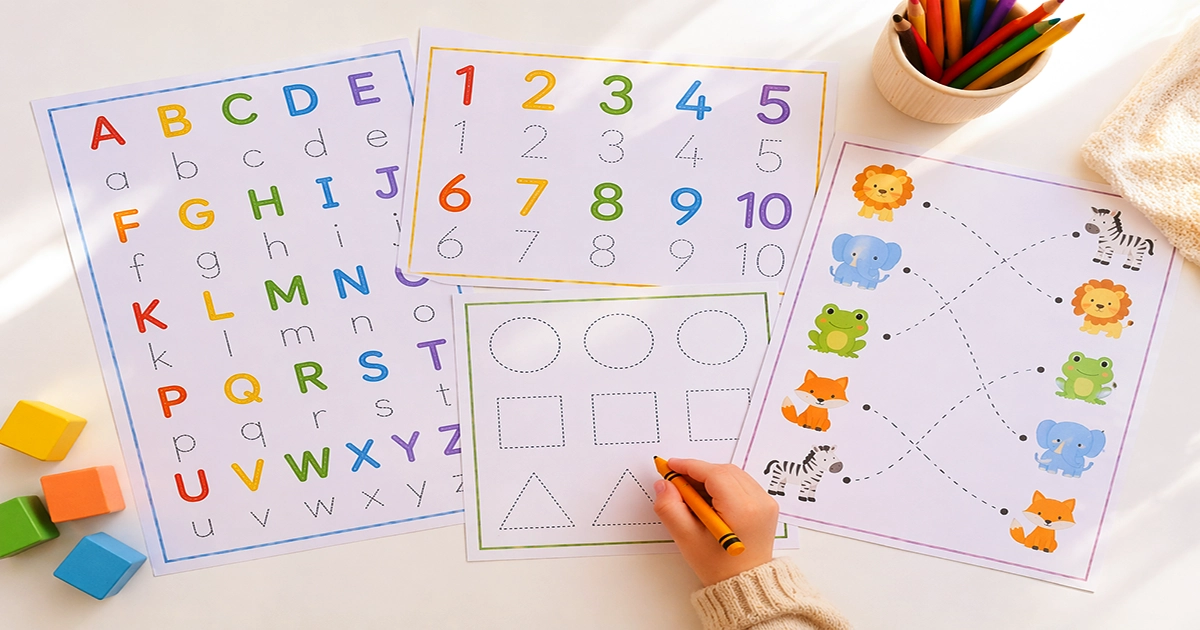
Printable worksheets for preschool children are PDF activities covering tracing, letter recognition, number practice, shapes and matching. Designed for children aged 3 to 5, they build fine motor skills, pencil control and early reading and maths readiness. Each file downloads instantly and prints clearly on a standard home printer.
Table of Contents
- Why printable worksheets work so well for preschool learning.
- What skills do preschool worksheets help build.
- Best types of printable worksheets for preschool kids.
- How to use printable worksheets at home effectively.
- Explore our preschool worksheet collection.
- Frequently asked questions.
Why Printable Worksheets Work So Well for Preschool Learning
Some mornings, you just want your child to sit with something calm. Not a screen, not a toy needing constant supervision, just a simple activity where they feel settled and something useful is quietly happening. Printable worksheets for preschool children are exactly where to start.
You download, you print, you hand it over. Your child picks up a pencil and gets started. No prep, no mess, no setting up.
For children between 3 and 5, paper-based activities build focus in a way that feels natural rather than forced. A pencil in hand and a clear task in front of them has a grounding effect few other activities match. A brief worksheet session fits easily into a morning routine or a quiet spell after lunch, and children tend to respond well because the activity has a clear beginning, a middle and a satisfying end.
What Skills Do Preschool Worksheets Help Build
Preschool is a quieter kind of learning, but what happens in these years shapes everything that follows. The right printable activities, from simple tracing sheets to matching exercises, support several of those early skills at once.
Your child’s fine motor skills grow with every pencil stroke, every cut, every piece they stick into place. Each small movement strengthens the muscles and coordination they will need for writing. Even a single tracing sheet works those muscles in a way free play alone does not always reach.
Pencil control develops quietly with repetition. Children who trace letters, numbers and shapes regularly develop a steadier grip and more confident strokes, which makes an enormous difference when they begin writing their own letters in school. Alongside this, letter recognition and number recognition grow naturally. When a child sees the letter A repeatedly across different activities, the letter starts to feel natural and recognisable.
Pre-writing practice through line tracing, curve work and pattern sheets gives children the muscle memory they need before they ever attempt a full word. Hand-eye coordination develops through matching and cutting exercises, where the hand must follow what the eye sees. Both skills grow naturally while your child is simply having fun.
Child development experts note that most children aged 4 to 5 can focus on hands-on activities for 5 to 10 minutes at a stretch, making short worksheet sessions a natural fit for this age group, according to CDC Developmental Milestones.
We designed this worksheet collection with kindergarten readiness in mind. Each activity builds the pencil grip, letter familiarity and number recognition teachers look for at school entry. Not so easy it bores them, not so hard it discourages them. This balance is what keeps a child coming back to the same worksheet.
Best Types of Printable Worksheets for Preschool Kids
No single worksheet covers everything a preschool child needs. A good set of printable activities for preschoolers covers different skills and keeps things varied so children do not tire of the same format.
Alphabet and Number Tracing Worksheets
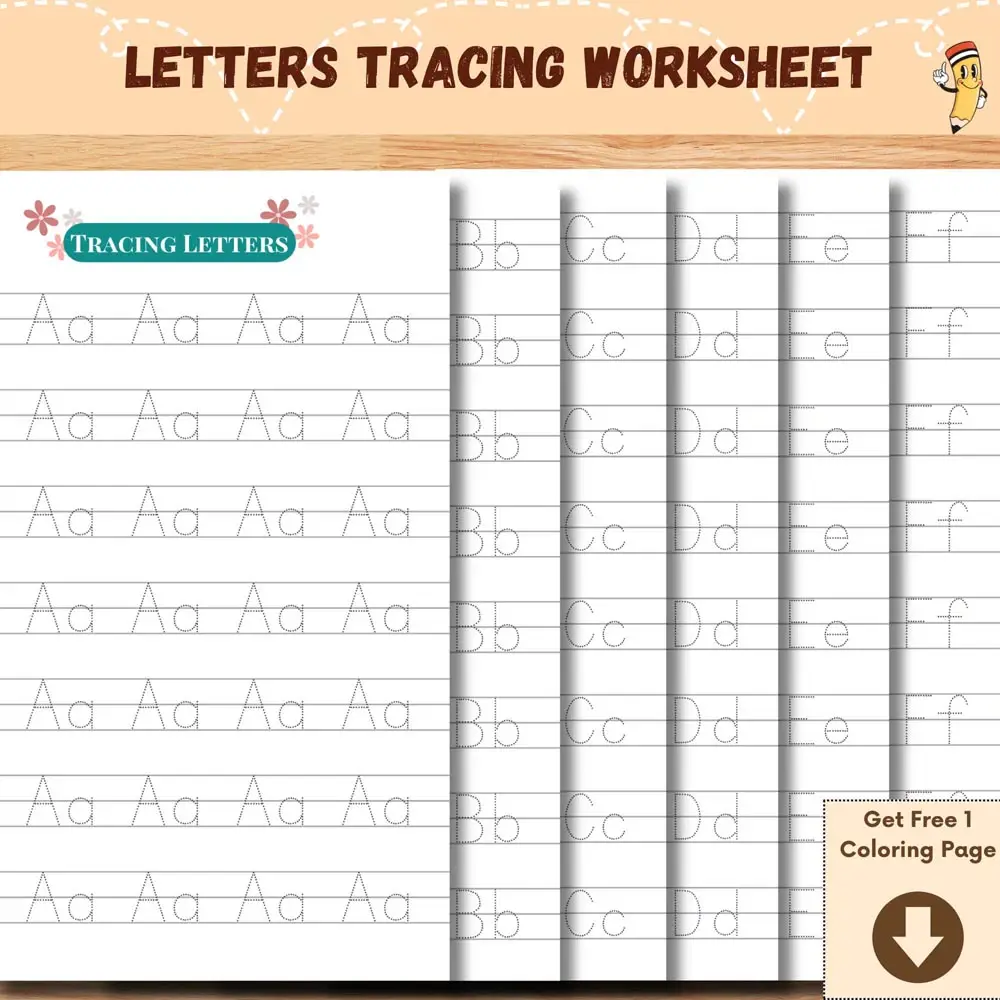
Alphabet tracing worksheets for kids are among the most used preschool activities because they build two skills at once. They develop letter recognition while also strengthening pencil control and pre-writing muscle memory. Children trace uppercase and lowercase letters, which helps them see how each letter is formed before they ever try to write it freehand.
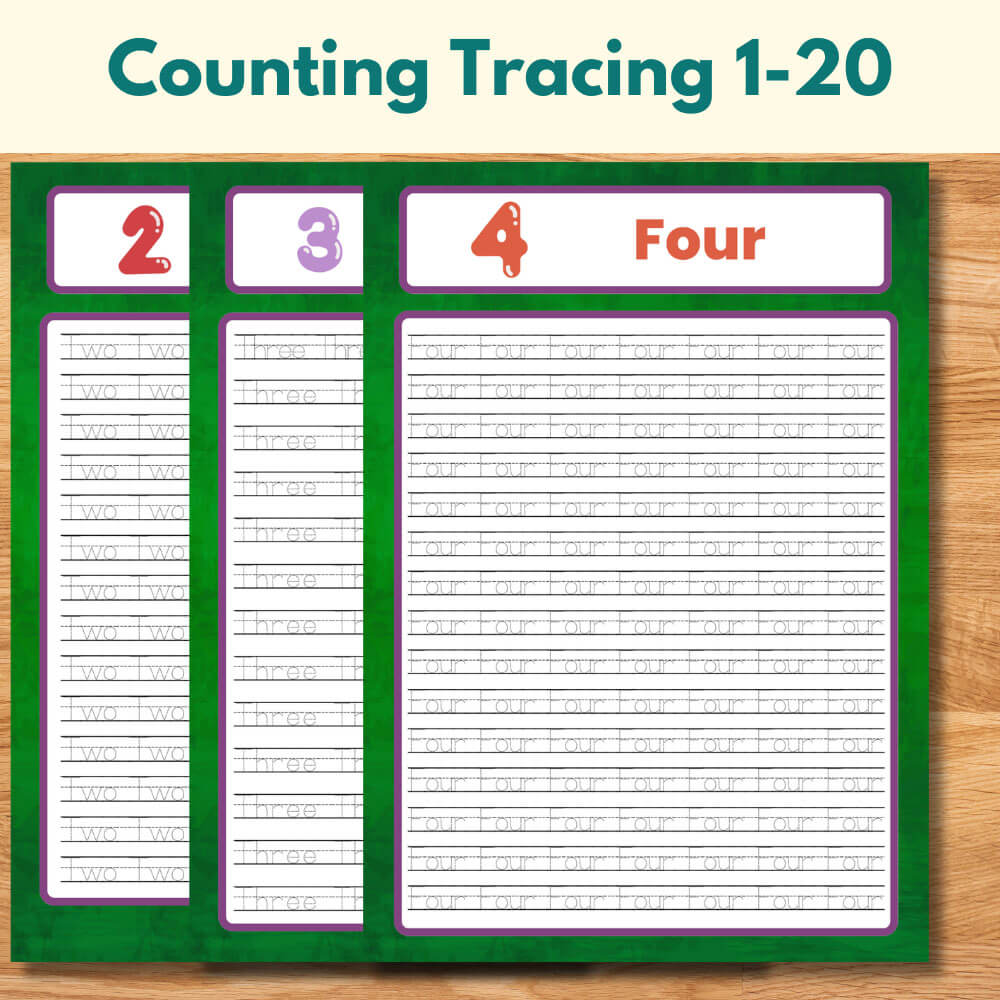
Number tracing worksheets work in the same way for early maths. When a child traces the number 3 or the number 7 repeatedly, the numeral starts to feel familiar both visually and in the hand. Pair tracing with counting objects on the same page and your child builds both number recognition and number sense together.
Browse our alphabet tracing worksheets to give your child a clear, well-structured starting point for letter practice.
These number tracing worksheets 1 to 10 give your child clear, structured tracing practice for numbers 1 through 10.
Shape and Color Recognition Worksheets
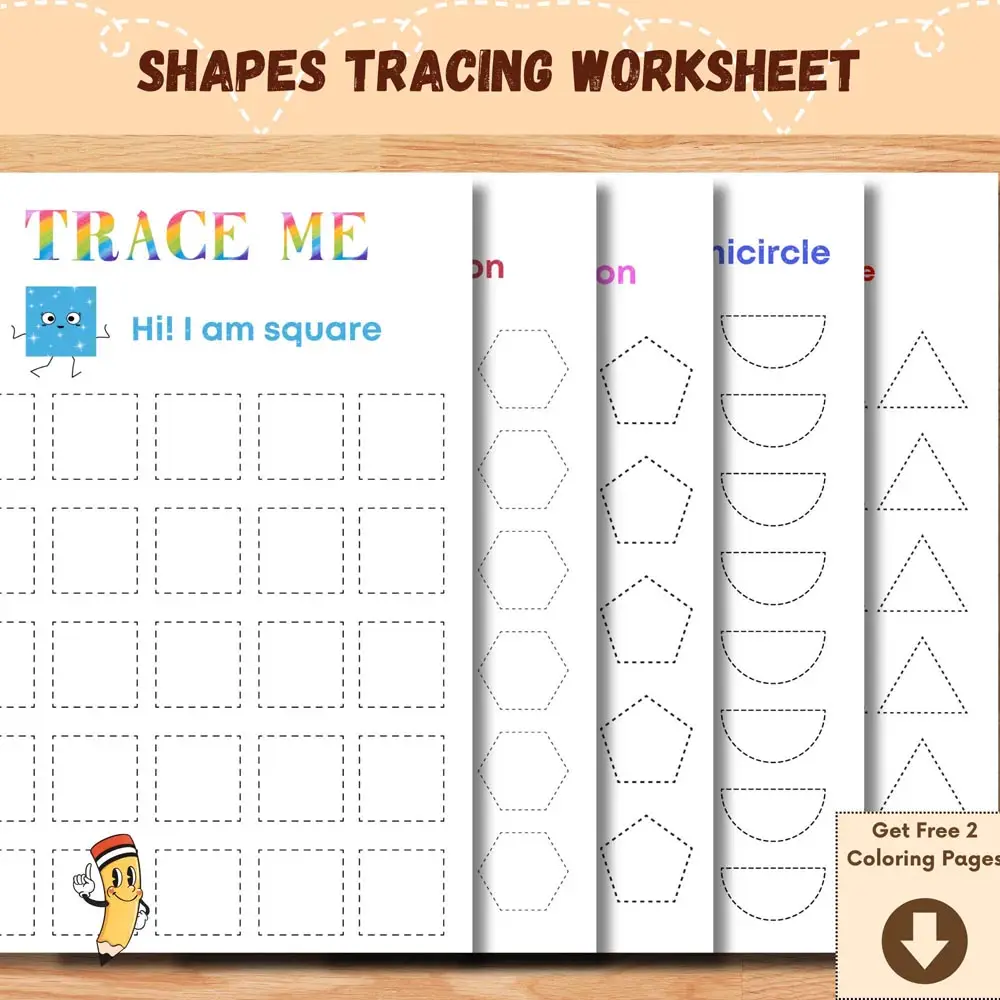
Shape recognition is one of the earliest maths concepts preschool children encounter. When children work with shape worksheets, they learn to identify circles, squares, triangles and rectangles, trace their outlines and begin to understand size and proportion.
Colour recognition activities sit naturally alongside shape work. Children match colours, sort objects by colour and complete colouring activities reinforcing colour names while also building fine motor control through careful colouring within lines.
Each shapes tracing worksheets covers circles, squares, triangles and rectangles with clear outlines sized for small hands.
Matching and Sorting Activities
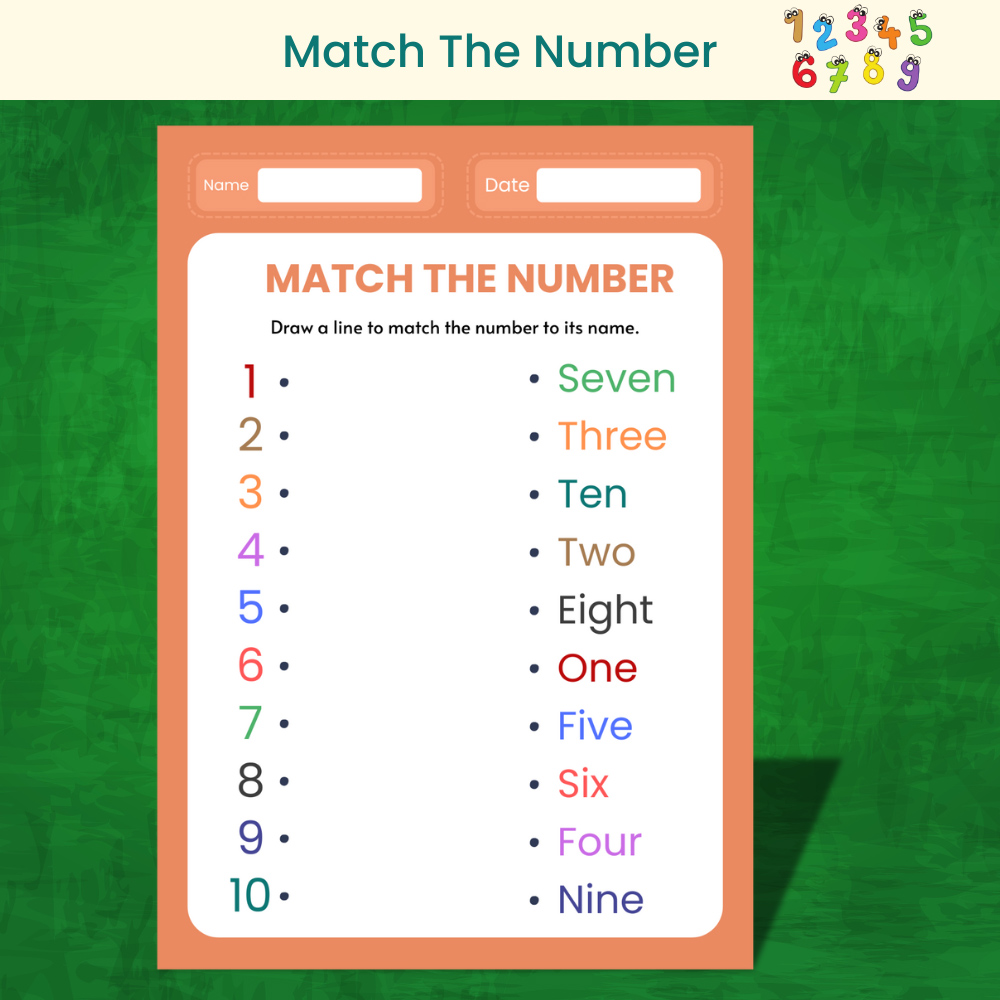
Matching worksheets ask children to draw a line, place a sticker or circle an answer connecting two related things. These activities build hand-eye coordination while also developing early logical thinking.
Sorting activities invite children to group objects by colour, size, type or shape. This kind of early categorisation builds the thinking skills underpinning maths and science learning in later years. For preschool children, sorting feels playful, which means children engage with it easily and without resistance.
Try our free number matching worksheet to see how your child responds to this format before exploring the full collection.
Cut and Paste Worksheets for Fine Motor Practice
Cut and paste activities build fine motor skills in a way few other worksheet formats can, because they call on multiple skills at once. Children must hold scissors correctly, guide them along a line, apply glue and place a piece accurately. Each of those steps requires concentration and coordination.
These worksheets also introduce children to following multi-step instructions, which is a skill they will need throughout their school years. Choose worksheets where the cutting lines are thick and clear and the pieces are large enough for small hands to manage without frustration.
Animal, EVS and Everyday Topic Worksheets
Children at preschool age are deeply curious about the world around them. Worksheets covering animals, body parts, transport, fruits and everyday objects give this curiosity a structured outlet.
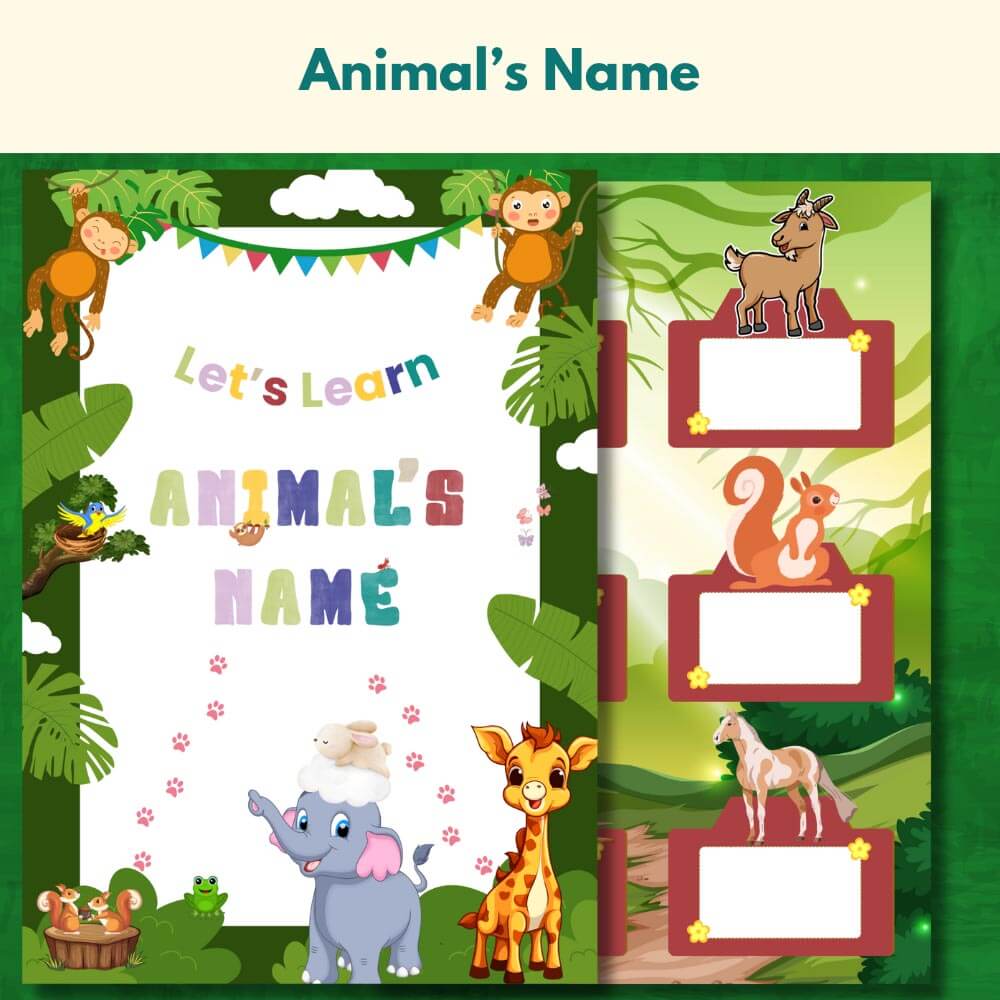
Our jungle-themed animal names worksheets feature elephants, giraffes, goats and more. Each page asks children to look at an animal illustration, read its name and complete a short activity around it. This builds early vocabulary and word recognition in a way children genuinely enjoy.
Our animal names learning worksheets come with 6 activity pages and 2 answer pages, making them easy for children to use independently at home.
How to Use Printable Worksheets at Home Effectively
Preschool worksheets to print work best as a natural part of the day, not a formal sit-down lesson. Each preschool worksheets PDF opens in seconds and prints straight away, so there is no waiting around before your child can get started. A few things make the experience better for both parent and child.
Keep sessions short. Ten to fifteen minutes is plenty for a preschool child. Their attention is real but it is brief, and ending the activity while they are still engaged leaves them willing to return to it the next day.
Let your child choose the pencil, crayon or marker they want to use. This small choice gives them a sense of ownership over the activity, which makes them more likely to settle into it happily.
Print on 80gsm plain white paper for tracing and writing activities. If your child is colouring, slightly thicker paper at 90 to 100gsm prevents bleed-through and gives a crisper colour. For worksheets you want to reuse, laminate them after printing and use a whiteboard marker. Wipe clean and repeat as many times as your child needs.
Do not expect perfection. A 3-year-old tracing the letter A for the first time will not produce a neat result, and that is completely fine. The practice itself is what builds the skill over time.
Pair worksheet time with a comfortable spot. A small table, good lighting and the child sitting at the right height all make a difference to how long they stay focused.
Explore Our Preschool Worksheet Collection
Every worksheet in our collection prints clearly on plain paper at home. Each file is an instant download, ready to print as many times as you need for repeated practice. All activities are age-appropriate for children between 3 and 5 and designed to fit comfortably into a home learning session.
To try before you buy, our free number matching worksheet is ready to download with no purchase needed.
The full educational templates collection organises worksheets by skill and age group.
If your child enjoys hands-on learning beyond pencil and paper, these printable educational games offer a playful extension to worksheet practice.
Ready to Download Your First Set
Browse our collection, pick the skills you want your child to work on, and download instantly. Every file prints clearly at home and gives your child a focused, hands-on activity they can complete at their own pace.For worksheets across all age groups, our printable worksheets for kids complete guide covers activities from toddler level through to Class 2 learning sheets.
FAQ
Preschool children between 3 and 5 do well with tracing worksheets for letters and numbers, shape recognition activities, colour matching, simple cut and paste tasks and picture-based matching exercises. Short sessions of 10 to 15 minutes work best at this age.
Yes, when used in short sessions alongside play. Printable worksheets build fine motor skills, pencil control, letter and number recognition and early logical thinking. They work best as one part of a child’s day rather than the whole of it.
A good preschool worksheet set covers the alphabet and letter sounds, numbers 1 to 20, basic shapes and colours, pre-writing line practice, matching and sorting, and simple vocabulary through pictures of animals, objects and the world around them.
Print the worksheet, set your child up at a comfortable table with their preferred pencil or crayon and keep the session to around 10 minutes. Let them work through it at their own pace. If they struggle with a step, guide their hand lightly rather than correcting. End on a positive note so they associate the activity with a good feeling.
Yes. Regular worksheet practice builds the pencil grip, letter recognition, number familiarity and attention span that teachers expect when children start school. Children who have practised tracing and matching regularly settle into formal classroom activities with much more confidence.