

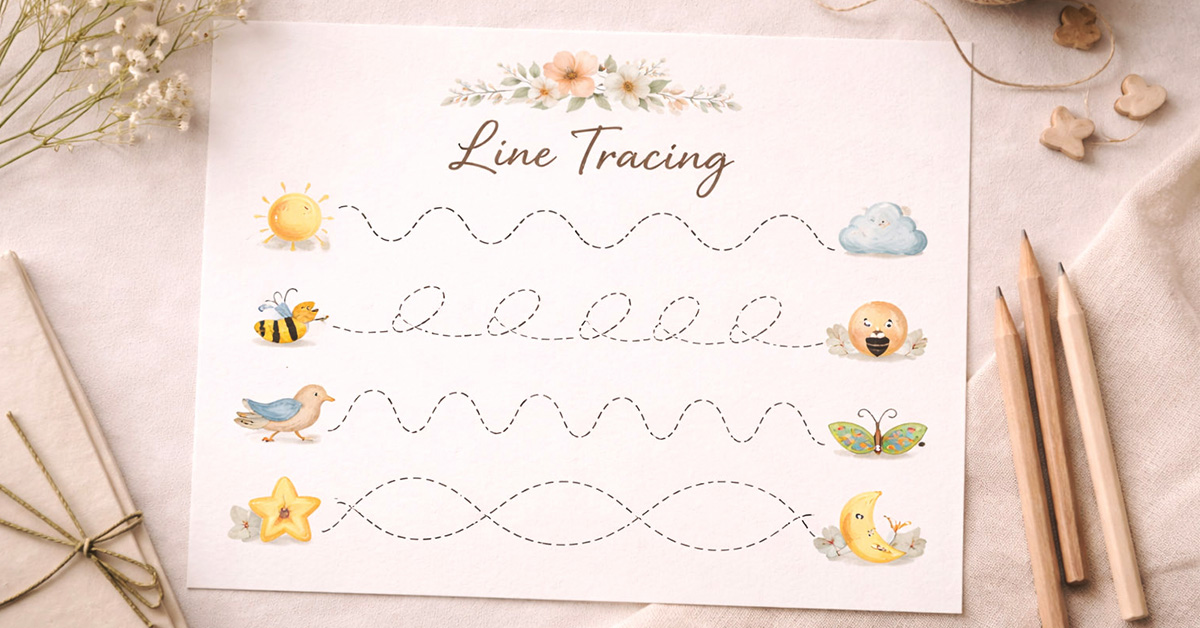
Why Are Tracing Worksheets The Best Starting Point For Early Learning At Home?
Early learning at home is not about pushing children toward academic achievement as quickly as possible. It is about helping them develop comfort, confidence, and curiosity toward learning itself. The first learning experiences a child has at home often shape how they feel about education for many years. When these experiences feel overwhelming or demanding, children may begin to resist learning altogether.
Many parents start home learning with good intentions but unknowingly introduce activities that require accuracy, answers, or independent writing too early. At this stage, children are still developing hand strength, coordination, and focus. This is why tracing worksheets for early learning are considered the most effective and developmentally appropriate starting point for home education. Tracing activities allow children to participate successfully without pressure, helping them build foundational skills in a calm and supportive way.
Early Learning Should Start With Readiness, Not Results
Why Developmental Readiness Matters
Before children are ready to write letters or numbers independently, their bodies need time to develop essential motor and cognitive skills. These include finger strength, hand stability, visual coordination, and the ability to follow simple directions. These skills are the foundation of writing, drawing, and many daily tasks.
When learning begins too quickly with performance based activities, children often struggle with grip, tire easily, or lose interest. Tracing worksheets respect this natural developmental process by focusing on readiness instead of results.
How Tracing Supports Natural Development
Tracing activities provide a clear path for children to follow. Because the shape, line, or letter is already drawn, children do not need to guess or invent. They can focus entirely on movement and control. This removes anxiety and allows learning to happen at the child’s own pace.
For parents, this approach reduces pressure as well. There is no need for constant correction or comparison. Learning becomes calm, predictable, and supportive.
How Tracing Worksheets Build Confidence In Young Learners
The Importance Of Early Success
Confidence is one of the strongest predictors of long term learning success. When children feel capable, they are more likely to stay engaged and curious. When they feel overwhelmed, learning quickly becomes something they avoid.
Tracing worksheets are designed to create success without judgement. Each completed page gives children a sense of achievement. Over time, these small successes build patience, focus, and self belief.
Emotional Safety In Home Learning
Home learning depends heavily on emotional safety. Children learn best when they feel secure and supported. Tracing activities reduce fear of mistakes and allow children to explore learning without stress.
Parents often notice that children who begin with tracing are more willing to try new activities later, including drawing, colouring, and writing.
The Role Of Line Tracing In Fine Motor Development
Why Line Tracing Is Essential
Line tracing is one of the most effective early learning activities for strengthening fine motor skills. Straight lines, curves, waves, and zigzag patterns teach children how to guide their hand with control and intention.
These movements help develop proper pencil grip, pressure control, and hand stability. Without these skills, children often struggle with handwriting and fatigue quickly during writing tasks.
Structured Practice For Better Control
Consistent practice using line tracing worksheets for preschool supports smooth hand movement and improves coordination. Line tracing also strengthens focus, as children learn to follow a path from beginning to end.
Tracing worksheets for early learning strengthen these foundational motor skills before children are expected to write independently.
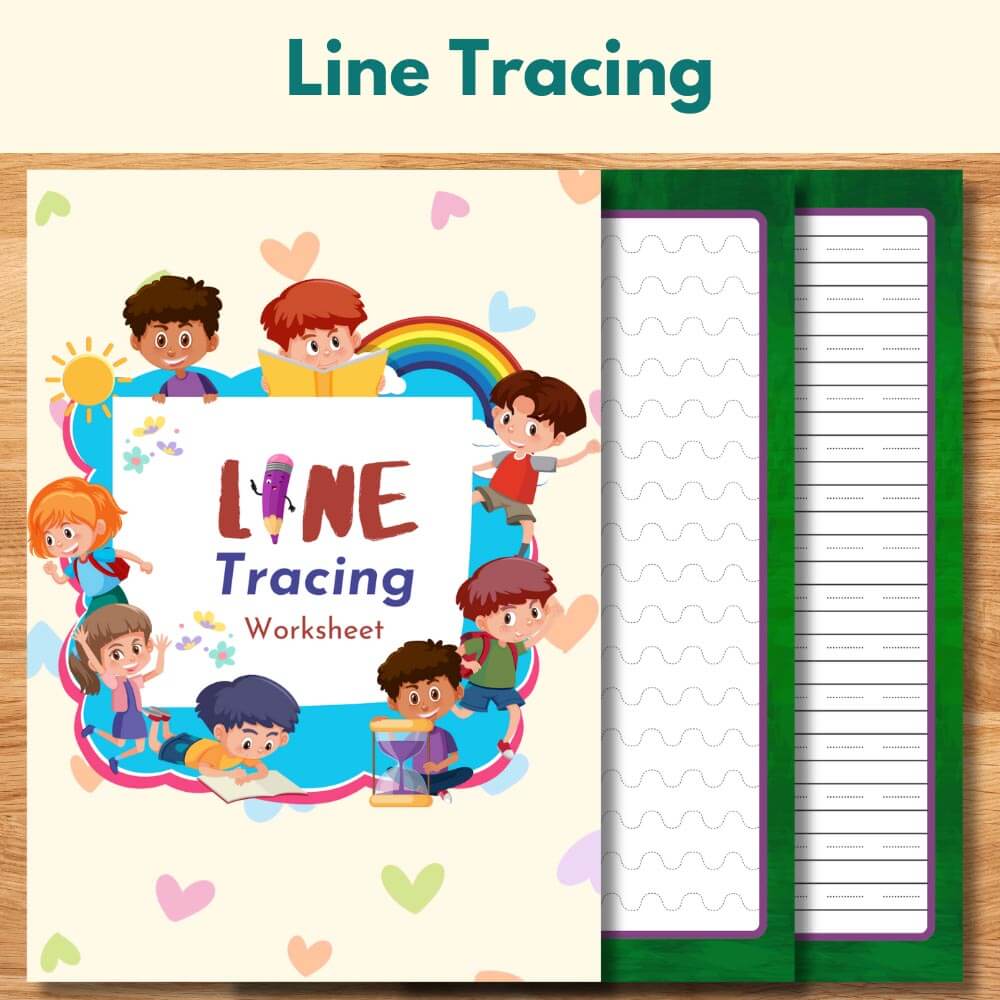
Why Alphabet Tracing Should Come Before Independent Writing
Understanding Letter Formation
Alphabet tracing introduces letters in a structured and supportive way. At an early age, children are still learning how letters are shaped and how strokes flow together. Asking them to write independently too soon often leads to incorrect formation and frustration.
Tracing letters helps children understand letter structure before they are expected to produce letters on their own.
Building Memory Through Repetition
Using alphabet tracing worksheets for beginners builds visual memory and muscle memory at the same time. Repeated tracing allows letter shapes to feel familiar. When children later attempt free writing, they already recognise how letters should look and move.
This gradual transition reduces resistance to writing and keeps learning positive. If you are starting today, begin with simple line tracing first, then move into alphabet tracing when hand control feels steady.
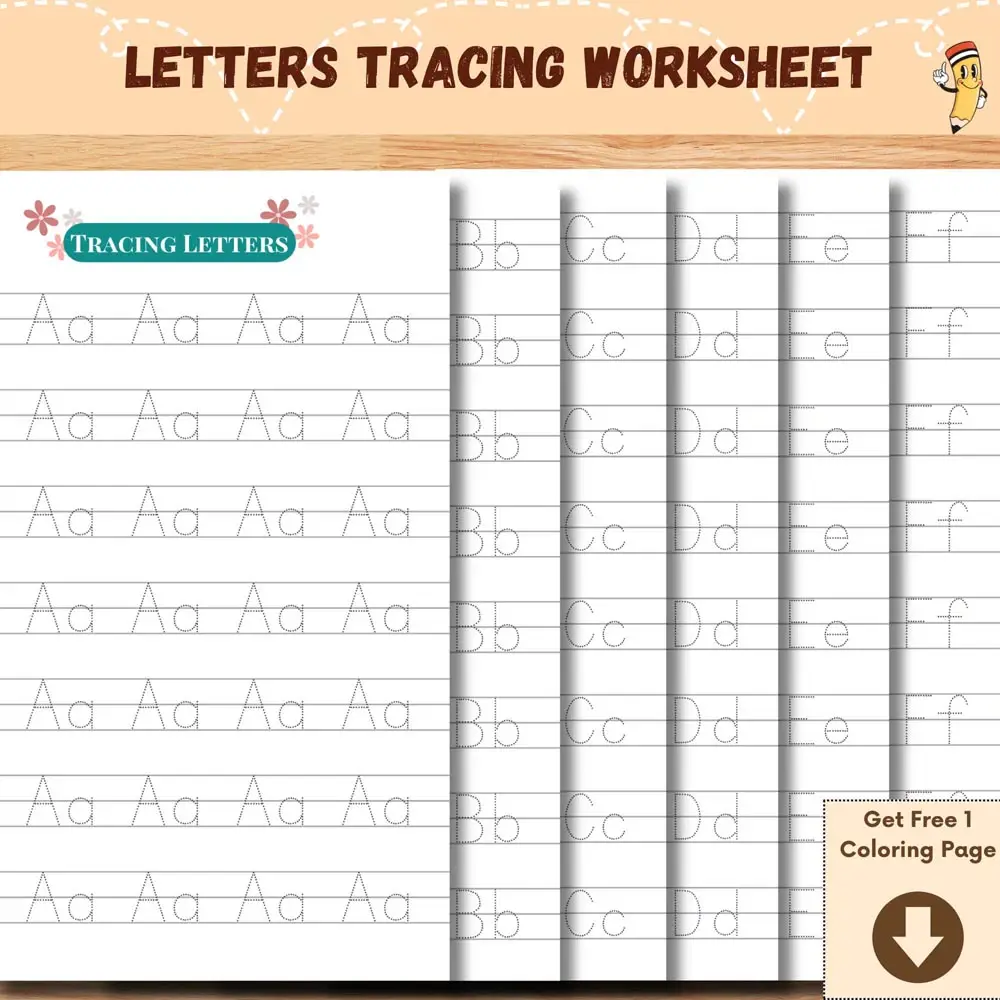
How Shape Tracing Supports Early Thinking Skills
More Than A Drawing Activity
Shape tracing supports both motor and cognitive development. Tracing shapes encourages children to observe edges, curves, and proportions carefully. This strengthens spatial awareness and visual discrimination.
Children begin recognising shapes in their surroundings, which supports early reasoning and classification skills.
Connecting Shapes To Real Life
Practising with shape tracing worksheets for early learners helps children connect abstract shapes with real world objects. This strengthens understanding through experience and supports later learning in mathematics and problem solving.
When Number Tracing Fits Into Early Learning
Introducing Numbers At The Right Stage
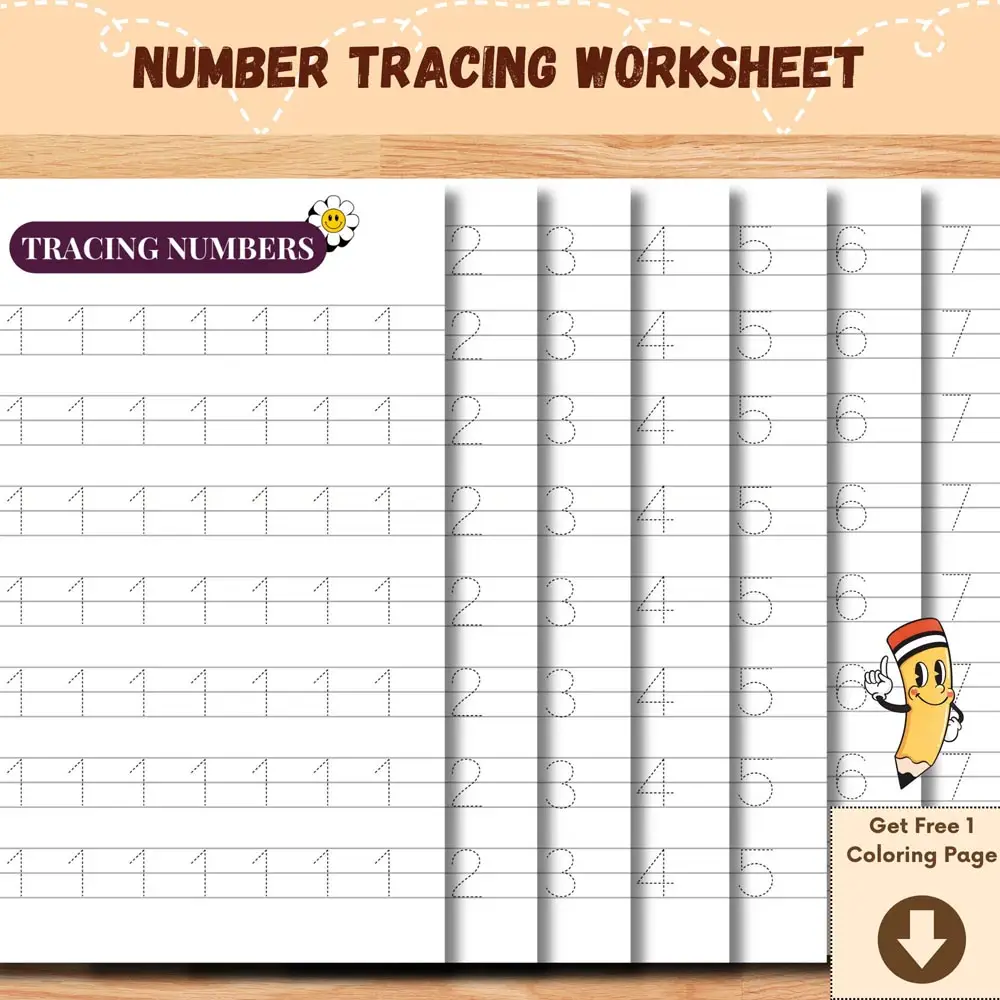
Number tracing should be introduced only after children are comfortable with line and shape tracing. At this stage, the goal is not counting accuracy or calculation. It is simply understanding number formation.
Tracing numbers allows children to become familiar with how numbers are written without pressure.
Building Confidence With Numbers
Using early learning worksheets for kids that include gentle number tracing helps children recognise number structure and writing flow. This early familiarity reduces anxiety around numbers and prepares children for future math learning in a calm way.
Tracing Worksheets And Healthy Home Learning Routine
Easy To Fit Into Daily Life
One of the greatest advantages of tracing worksheets is their flexibility. They do not require long sessions or constant supervision. Short practice periods of ten to fifteen minutes are enough to support steady progress.
Children can work independently while parents offer encouragement instead of continuous instruction. If you want a ready-to-use set, you can browse our Tracing Worksheets category and pick the worksheet style that fits your child’s stage.
Consistency Without Burnout
This balance creates a relaxed learning environment and prevents burnout. Over time, consistent short sessions build skills naturally without overwhelming the child. Because of this simplicity, tracing worksheets are often the first structured learning tool parents successfully use at home.
Conclusion
Early learning at home works best when children feel confident, comfortable, and capable. Tracing supports those early wins by building control, focus, and readiness without pressure. When you keep practice short and consistent, children naturally develop the skills they need before moving into independent writing.
To make this easier, you can start with a small printable set and keep sessions short and consistent.
Frequently Asked Questions
Yes. Tracing worksheets are ideal for beginners because they focus on readiness and guided learning rather than performance.
Short daily practice sessions are more effective than long or irregular ones. Consistency matters more than duration.
No. They prepare children for writing by building the physical and cognitive skills needed first.
Start with simple line tracing, then move to shapes, and introduce letters only when hand control feels steady.