

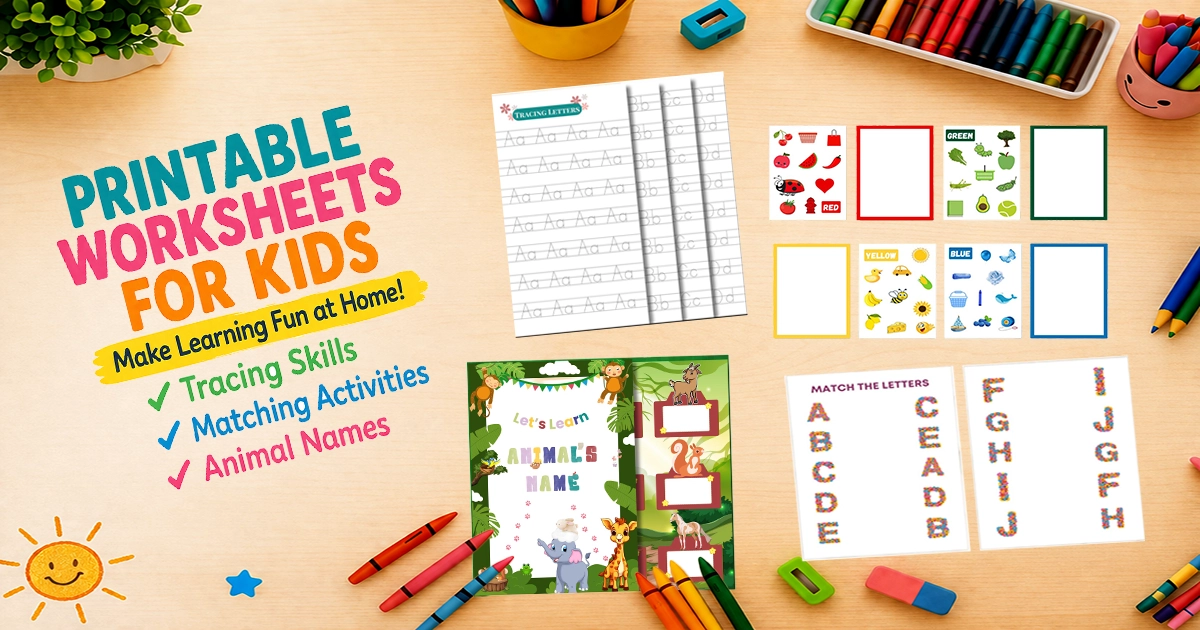
Quick Answer: The best printable worksheets for kids match exactly where your child is right now, not just their age. A 2-year-old needs matching and sorting with no pencil pressure. A nursery or preschool child benefits from pre-writing strokes and letter recognition. A 3-year-old is ready for beginner pencil control and shapes. Kindergarten children handle tracing and patterns well. Class 1 and Class 2 children are ready for subject-based practice. Every worksheet in the collection prints clearly on a standard home printer, so you download, print, and begin the same day.
Table of Contents
- Why Printable Worksheets Help Kids Learn at Home.
- Worksheets for 2-Year-Olds: Where to Begin.
- Worksheets for Nursery and Preschool Kids: Building School Readiness.
- Worksheets for 3-Year-Olds: First Steps with Pencil and Shapes.
- Worksheets for Kindergarten: Tracing, Recognition, and Patterns.
- Worksheets for Class 1: Printable Practice for Every Subject.
- Worksheets for Class 2: Deepening Foundational Skills.
- How to Choose the Right Printable Worksheets for Kids.
- How to Print Worksheets at Home for the Best Results.
- Explore Our Printable Worksheet Collection.
- Frequently Asked Questions.
Why Printable Worksheets Help Kids Learn at Home
Most parents reach a point where they want something focused and low-screen to do with their child at home, but they are not sure where to start. The options online can feel overwhelming, and what looks right often turns out to be too advanced, too simple, or simply unable to hold a young child’s attention past the first few minutes.
Printable worksheets for kids cut through that confusion. You choose by age, you download, you print, and you begin. No preparation needed, no guessing about whether the activity suits your child. Print it, place it in front of them, and begin.
What makes printable worksheets for kids particularly effective is the kind of attention they demand. Parents often look for kids printable worksheets that are easy to print, simple to use, and matched to their child’s age and skill level, and that is exactly where structured practice makes a real difference. Tracing, matching, coloring, and sorting all ask a child to sit, focus, and complete something from start to finish. These short acts of structured practice build concentration and fine motor skills in ways that touchscreen activities simply cannot replicate. When a child finishes a worksheet, they feel the satisfaction of completion. That small experience of effort leading to a result is one of the earliest building blocks of a child’s relationship with learning.
Home learning printables for kids also give parents something concrete to work with together. Ten minutes alongside your child with a well-chosen worksheet does more for early development than an hour of passive screen time. The activity is focused, the outcome is visible, and the child feels your full attention.
Every design in our collection goes through a home printing test before it reaches you. Colors stay accurate and details stay crisp whether you print in full color or black and white on a standard home printer, because that is the experience that actually matters at home.
The sections below walk through each age and stage clearly, so you can find the right printable worksheets for kids without guesswork.
Worksheets for 2-Year-Olds: Where to Begin
Two-year-olds are curious and energetic, but their hands are not yet ready for pencil work. At this age, the goal of any printable activity is engagement and recognition. Accuracy is not the point. Confidence and curiosity are.
Matching and sorting come first
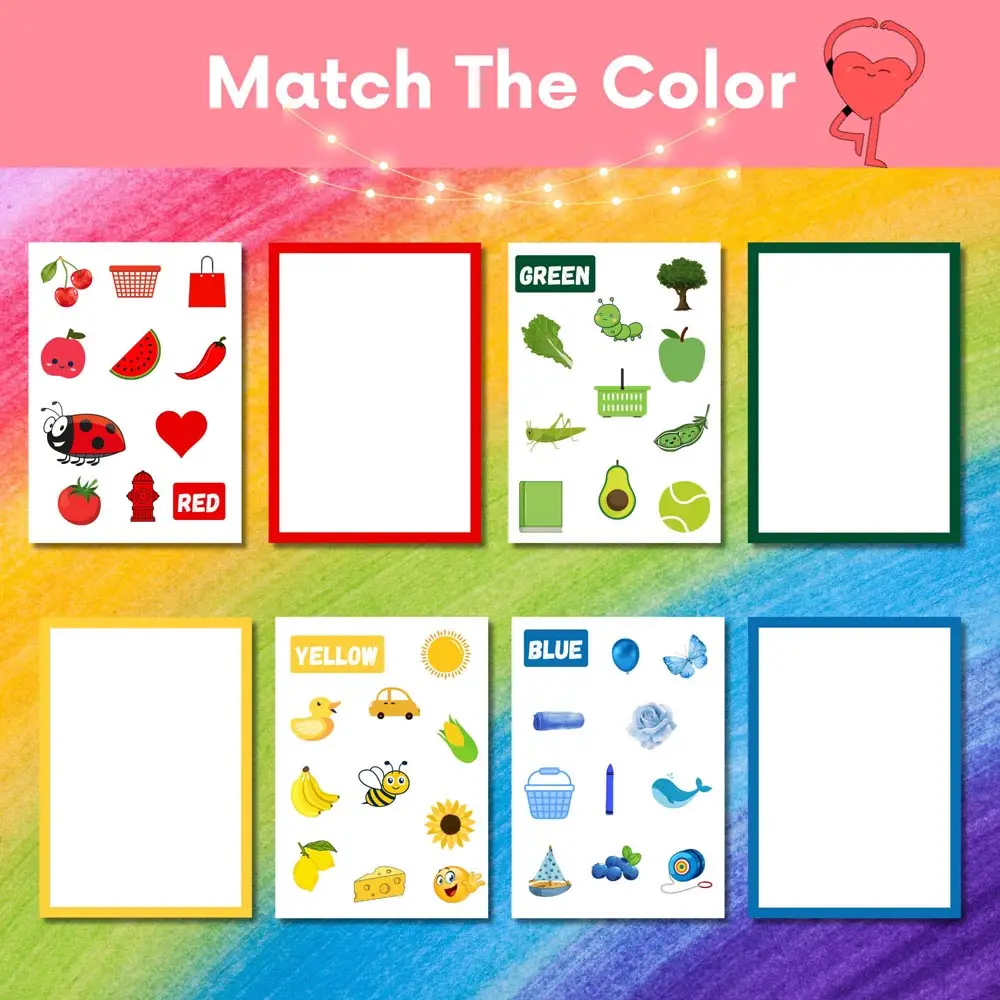
Color matching works beautifully at this age. Asking a child to match a red object to its group, connect two identical colors, or sort objects by color builds visual recognition and early thinking without any writing pressure at all. Sorting by size or shape develops the same thinking from a slightly different angle.
These activities support early learning exactly where it belongs at this stage: in observation and play, not in pencil control. Two-year-olds learn through looking, touching, and responding to familiar colors and images. A worksheet built around colors gives them something immediately recognizable to engage with while quietly building memory, focus, and pattern recognition.
Keep sessions short and parent-led
Ten minutes is enough at this age. Sit alongside your child and guide gently. The worksheet starts a conversation, not a test. This parent-led approach makes early learning feel warm and safe rather than pressured, which matters enormously for how a child feels about learning in the years ahead.
Children respond immediately to worksheets built around colors they already know. Browse the Color Matching Game for Kids designed for toddlers: bright familiar visuals, no pencil needed, no pressure involved.
Worksheets for Nursery and Preschool Kids: Building School Readiness
Children in nursery and preschool, typically aged 3 to 4 years, are preparing for structured learning for the first time. The printable worksheets for kids at this stage focus on school readiness: building the early habits, awareness, and physical skills children need when formal education begins.
This group is distinct from 2-year-olds in one important way. These children are beginning to understand that activities have a right direction, that completing something correctly feels good, and that a little effort leads somewhere. That awareness opens the door to recognition work, early line tracing, and beginning familiarity with letters and numbers.
Pre-writing strokes before letters
Before a child can trace a letter, they need comfort with making deliberate marks on paper. Pre-writing worksheets introduce the strokes that build every letter: horizontal lines, vertical lines, gentle curves, and diagonal paths. Practicing these builds the muscle memory and hand stability that makes actual letter tracing feel achievable when the time comes.
Recognition through gentle familiarity
At nursery and preschool level, children benefit from seeing letters and numbers consistently without being asked to reproduce them. Matching a letter to its pair, coloring shapes that belong together, or circling the picture that matches a word all build recognition gradually and without pressure.
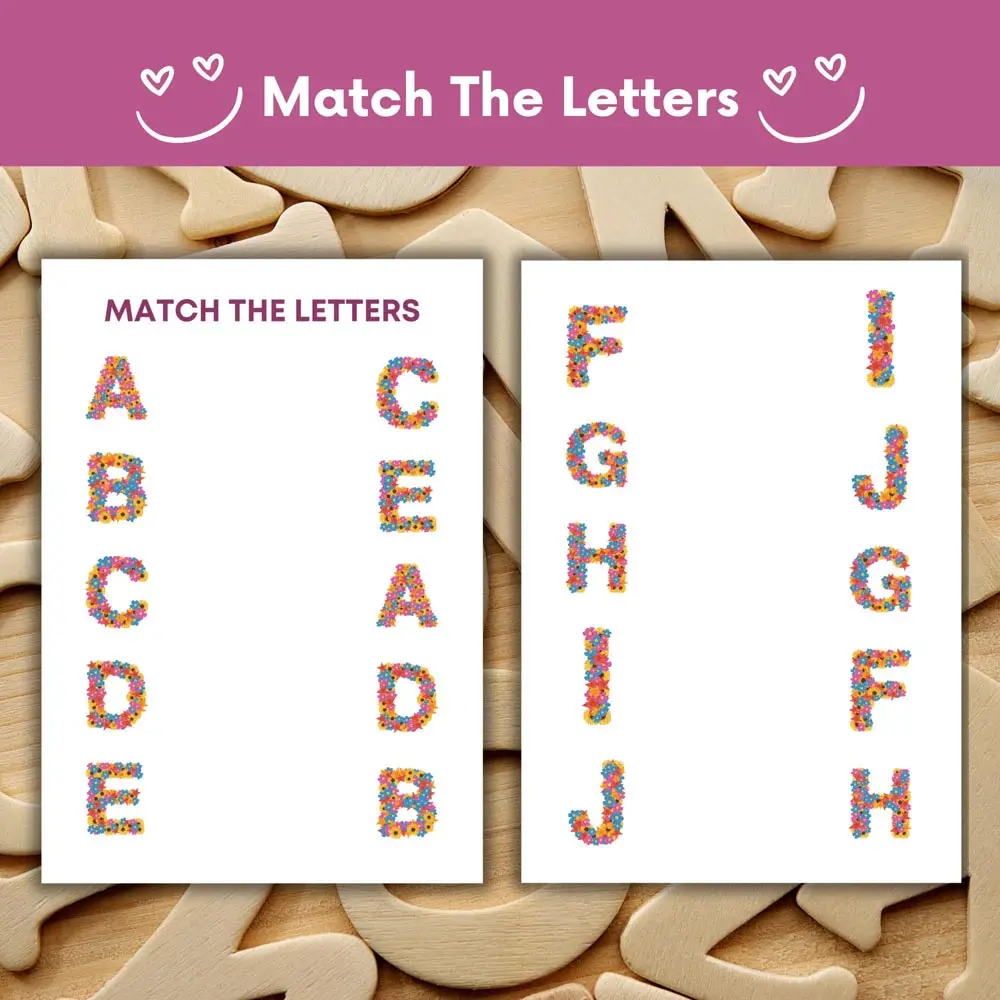
Letter matching worksheets work particularly well at this stage because children engage with the alphabet visually before they write it. Browse the ABC Matching Worksheet for Kids to find colorful letter pairs nursery children can identify and connect, building early literacy awareness in a completely pressure-free way.
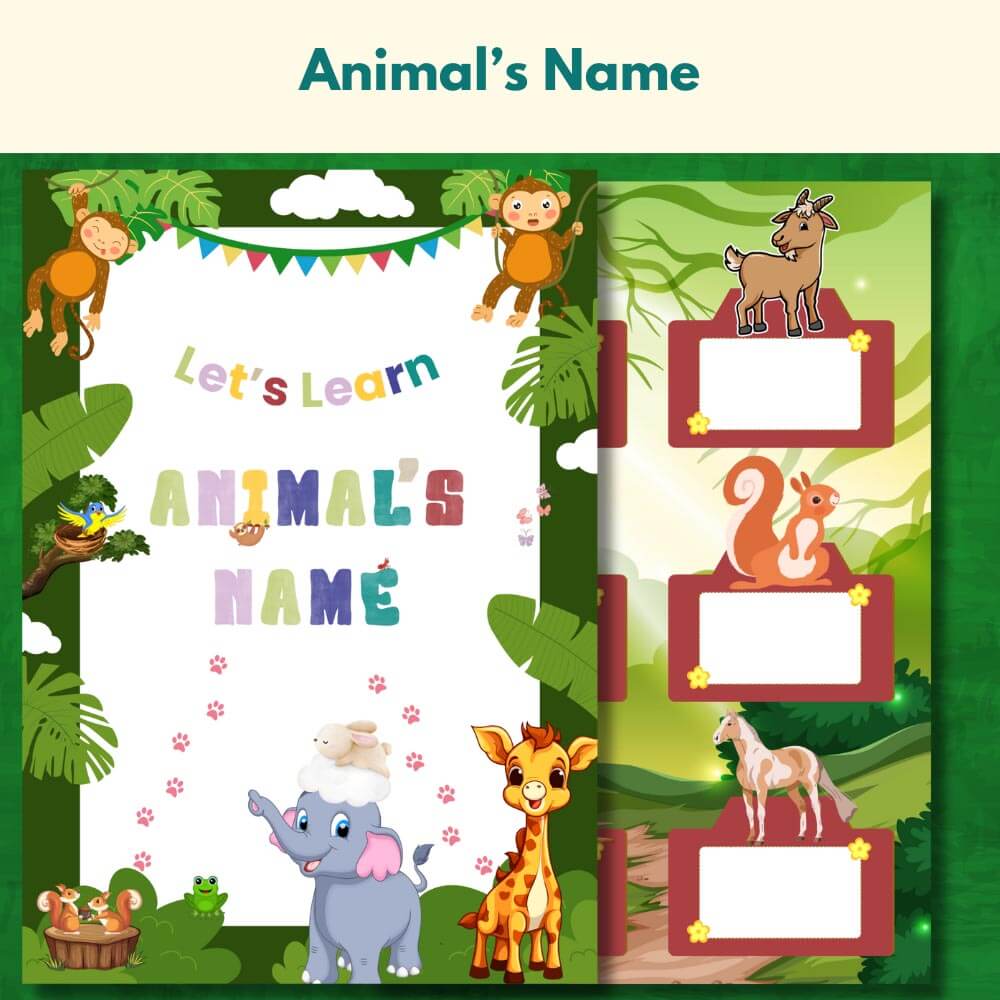
Animal recognition is equally natural at this age. Children this age already know lions, elephants, and rabbits from storybooks and everyday life, which makes animal-themed worksheets feel immediately familiar. Animal Name Learning Worksheets build vocabulary and visual recognition together, turning something a child already loves into a structured learning moment.
Home learning printables for kids at this stage work best when the activity feels more like play than practice. Colors and Shapes Printable Worksheets support exactly this, helping nursery and preschool children build awareness through activities that feel completely natural at their age.
Worksheets for 3-Year-Olds: First Steps with Pencil and Shapes
At three years old, many children are ready to pick up a pencil and make deliberate marks for the first time. Physical readiness and the desire to create start to come together. The right educational worksheets for children at this stage channel that energy into pencil control and shape recognition without demanding precision.
This section covers different ground from the nursery section above. Where nursery focuses on recognition and early routine, 3-year-olds are specifically ready for beginner pencil work. That distinction matters in practice: nursery worksheets rarely involve a pencil at all, while worksheets for 3-year-olds make pencil control the central activity.
Line tracing builds the foundation
The first thing a 3-year-old learns on paper is how to guide a pencil along a path. Simple line-tracing worksheets, where a child follows a dotted line between two points, are ideal here. Wavy lines, gentle curves, and short diagonal paths each develop different aspects of hand control. Children at this age enjoy the physical act of drawing, so varying the path shapes holds their interest well.
Shape tracing introduces early thinking
Once a child can follow a line, shape tracing is the natural next step. Tracing circles, squares, and triangles teaches that specific movements produce specific results, which connects directly to early geometry awareness and to the letter-writing skills that follow later.
Explore the Tracing Worksheets for Early Learning for exactly this progression: simple line tracing first, shapes next, at a pace that feels natural for children just beginning their writing journey.
Worksheets for Kindergarten: Tracing, Recognition, and Patterns
Kindergarten is where early learning starts to feel genuinely structured, and children are ready for it. Most kindergarten children can hold a pencil with some confidence, follow a short direction, and sit through a focused activity of 15 to 20 minutes. The printable worksheets for kids at this stage bring together tracing, recognition, and pattern work in one clear routine.
Alphabet and number tracing
Tracing letters A to Z and numbers 0 to 9 is the primary writing focus for kindergarten children. Good tracing worksheets show each letter clearly, provide dotted guidelines to follow, and give enough repetition for muscle memory to form. When tracing feels achievable, children want to repeat it. That willingness to keep going is exactly how early writing confidence builds.
Children who use the Alphabet and Number Tracing Worksheets often find the alphabet starts to feel like something they are mastering, not something they are struggling through.
Colors, shapes, and early patterns
Alongside writing, kindergarten children deepen their understanding of colors and shapes with more variety and complexity. Identifying 10 to 12 colors, recognizing 2D shapes in different orientations, and completing simple AB and ABC patterns build the visual thinking that supports both math and reading readiness in the years ahead.
EVS topics connect learning to daily life
Many kindergarten children begin Environmental Studies, which introduces their world through subjects like animals, transport, the human body, and nature. Printable learning worksheets on these topics work particularly well at this age because children already know the subjects from daily experience. Recognition comes naturally, and structured practice deepens it.
Familiar visuals and simple activities make the EVS Worksheets for Kids feel connected to what children already see and experience every day.
Worksheets for Class 1: Printable Practice for Every Subject
Class 1 children are ready for subject-specific printable worksheets for kids that go beyond tracing. Literacy, math, and EVS develop in parallel at this stage, and short focused practice in each subject supports steady progress without overwhelming a young learner. Parents of Grade 1 children in international systems will find the content equally useful, as learning goals at this stage align closely across both curricular.
English and early literacy
Class 1 literacy practice covers recognizing common words, completing simple sentences, identifying letter sounds in words, and beginning to write independently. A well-designed printable gives children tasks that feel like real reading and writing rather than isolated drills, which keeps engagement high and builds genuine confidence.
Early math
Addition and subtraction within 10 to 20, number sequencing, and simple visual word problems form the core of Class 1 math practice. Printable worksheets that use familiar objects like fruits, animals, or everyday items make abstract number concepts feel concrete and approachable, so the math makes sense rather than just getting done. Short subject-based printable practice works best here because children can build confidence one skill at a time.
EVS through printable activities
By Class 1, children explore their environment more systematically. Early EVS work connects what children observe around them to what they learn in school. Printable activities on these topics help children organise what they observe and connect it to what they learn in school. Class 1 math and EVS practice sits in one place inside the Educational Templates collection.
Worksheets for Class 2: Deepening Foundational Skills
Class 2 children move from introduction into consolidation. They can read simple texts, write short sentences, handle addition and subtraction with regrouping, and engage with more connected EVS topics. The educational worksheets for children at this stage add challenge without removing clarity. Parents of Grade 2 learners in international school systems will find the content equally relevant, as the skills being developed at this stage are closely aligned.
Reading comprehension and written expression
Short comprehension passages, fill-in-the-blank sentence completion, and simple guided writing activities help Class 2 children develop two skills that reinforce each other: understanding what they read and expressing ideas clearly in writing. Both skills form the foundation for all the academic learning that follows.
Math with growing complexity
Class 2 math builds on addition and subtraction with two-digit operations, basic measurement, and simple data reading from charts. Keeping each printable page focused on one concept lets children genuinely understand what they are doing before moving on. That clarity makes a visible difference in how confident a child feels sitting down to practice.
EVS with more connected thinking
At Class 2, EVS begins to show children how different things in their environment relate to each other. Worksheets that ask children to observe, label, and explain in simple terms build the analytical thinking that supports science and social studies in later years. Parents looking for printable worksheets by age group for their Class 2 child will find a full range of subject-specific activities to choose from.
How to Choose the Right Printable Worksheets for Kids
The most useful rule is to watch your child during the activity. If they finish quickly and want another immediately, the worksheet is too easy. If they become frustrated within the first few minutes, it is too hard. The right printable worksheets for kids sit in the space where your child feels challenged but capable.
Age ranges give you a starting point, not a fixed answer. A child with more experience of structured activities might be ready for worksheets a stage above their age. A child newer to sitting with focused tasks might benefit from beginning one stage back to build confidence first.
Follow your child’s current strength
If your child already enjoys making marks on paper, move directly to tracing and shape work. If they are still building the patience to sit and focus, begin with matching activities that require no pencil use at all. Let their current comfort level guide the entry point.
Each worksheet targets a specific combination of skills so parents can choose by what their child is genuinely ready for right now, not simply by a number on a label.
How to Print Worksheets at Home for the Best Results
Standard 80 GSM printer paper works well for most printable worksheets for kids. If you want results that feel more substantial, 120 to 160 GSM paper gives a noticeably better quality without requiring specialist equipment.
Set your home printer to the highest available print quality before you begin. Always print at 100 percent actual size, never scaling to fit the page, because scaling shifts the layout and affects how the activity looks when printed. All our worksheets come as high-resolution PDF files designed specifically for standard home printers. Colors stay accurate and details stay crisp whether you print in full color or black and white. Instant download means the file is ready the moment your purchase goes through.
Explore Our Printable Worksheet Collection
Browse our Complete Printable Worksheet Collection to find activities by age group, subject, and learning stage. Every worksheet is an instant digital download, available immediately after purchase and ready to print as many times as you need for personal use.
Your child just completed their first full tracing page or wrote their name for the first time? Celebrate that moment. Warm, beautifully illustrated cards you can download and print in minutes. Browse the Printable Greeting Cards collection for any occasion worth marking.
Please note: All products linked in this post are digital downloads only. No physical item will be shipped. Files are available immediately after purchase and are for personal use only.
Frequently Asked Questions
A: Children as young as two years old can use age-appropriate printable worksheets. Matching and sorting activities with no pencil work are ideal starting points. Choose based on your child’s current readiness, not a fixed age.
A: Printable worksheets build fine motor skills and focused attention that screen-based activities cannot replicate. The World Health Organization recommends no more than one hour of sedentary screen time per day for children under five. Printable activities offer a focused, low-screen alternative for structured learning at home.
A: For toddlers and preschoolers, 10 to 15 minutes three or four times a week is enough. For Class 1 and Class 2 children, 20 to 30 minutes of daily practice supports steady progress without pressure.
A: Early learning worksheets cover fine motor development, alphabet and number tracing, EVS topics, colors and shapes, and subject-specific practice for Class 1 and Class 2. The Educational Templates collection covers all of these areas in one place.
A: Print at 100 percent actual size, set quality to the highest available option, and use at least 80 GSM paper for everyday practice. All worksheets are high-resolution files built for standard home printers.
A: Yes. Every worksheet from DesignItLife can be printed as many times as you need for personal use.