

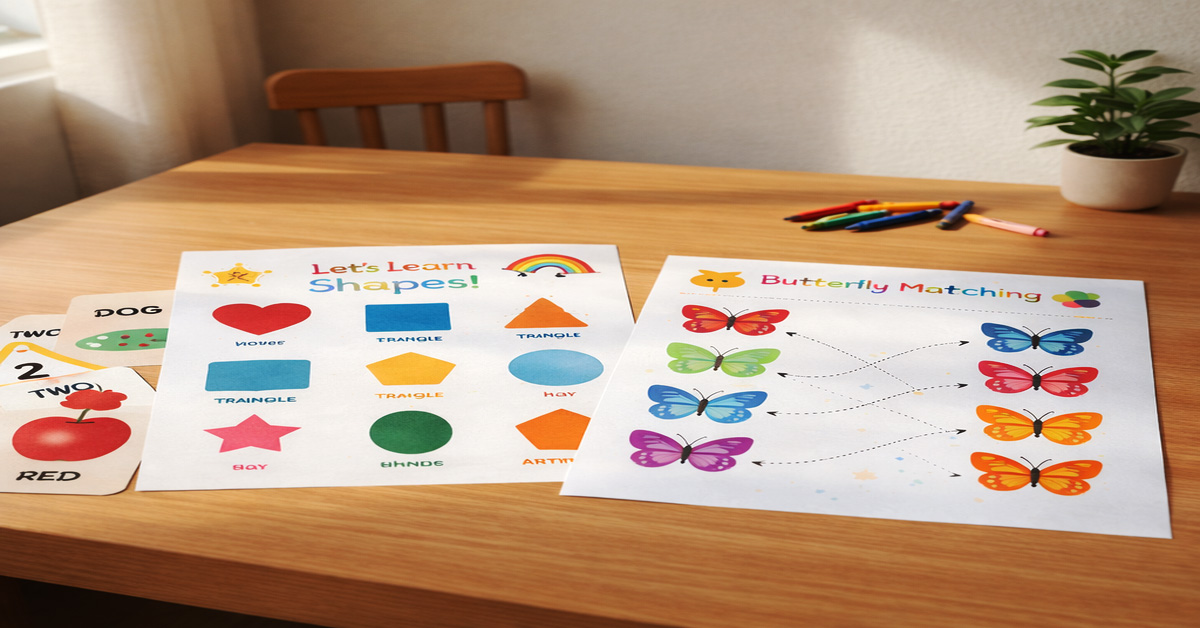
What Are Fun Ways to Teach Colors and Shapes to Kids Using Printable Worksheets?
Teaching colors and shapes is one of the earliest and most important learning stages for young children. These basic concepts help kids understand their surroundings, recognise patterns, and develop early thinking skills that later support reading, writing, and problem solving. However, children do not learn best when the process feels rushed or stressful. They learn more naturally when activities feel calm, playful, and emotionally safe. This is why many parents prefer colors and shapes printable worksheets at home, because learning stays playful, structured, and pressure free. Many parents want simple activities that keep early learning playful, calm, and pressure free.
Printable worksheets give families flexibility and control. Children can explore colors and shapes at their own pace, while parents can decide when and how learning fits into daily routines. When learning feels enjoyable rather than forced, children stay curious, confident, and motivated. This guide explains how parents can use printable worksheets and simple interactive tools to teach colors and shapes in a way that feels effective, engaging, and stress free. You can also explore our Educational Templates collection for more printable activities that fit this learning stage.
Why Colors and Shapes Should Be Taught Through Play
Young children understand the world primarily through visuals and hands on experiences. Colors and shapes appear everywhere in daily life, from toys and storybooks to food and household objects. When learning is introduced through play, children absorb information naturally without pressure.
Printable worksheets support this playful approach by turning learning into exploration. Instead of memorising facts, children observe, match, color, and interact with visual elements. This process helps build focus and confidence, which are essential for later academic skills. Parents also feel more relaxed when learning feels like shared playtime rather than formal instruction.
Fun Ways to Teach Colors Using Printable Worksheets
Building Colour Recognition Through Visual Exposure
Color learning begins with recognition. Children need to see colors repeatedly and clearly before they can confidently name or differentiate them. Printable resources that combine strong visuals with simple labels work especially well at this stage.
Parents can begin with butterfly color name flashcards to introduce a wide range of shades in a gentle and engaging way. These flashcards help children connect what they see with spoken color names, supporting both visual memory and language development. Using flashcards for a few minutes daily builds familiarity without overwhelming the child.
Many parents notice that once children recognise colors through flashcards, they start pointing them out in everyday surroundings. This natural transfer of learning is a strong sign of understanding.
Learning Colors Through Calm Coloring Activities
Coloring is one of the most relaxing and effective learning methods for young children. It supports focus, creativity, and fine motor development while reinforcing color recognition.
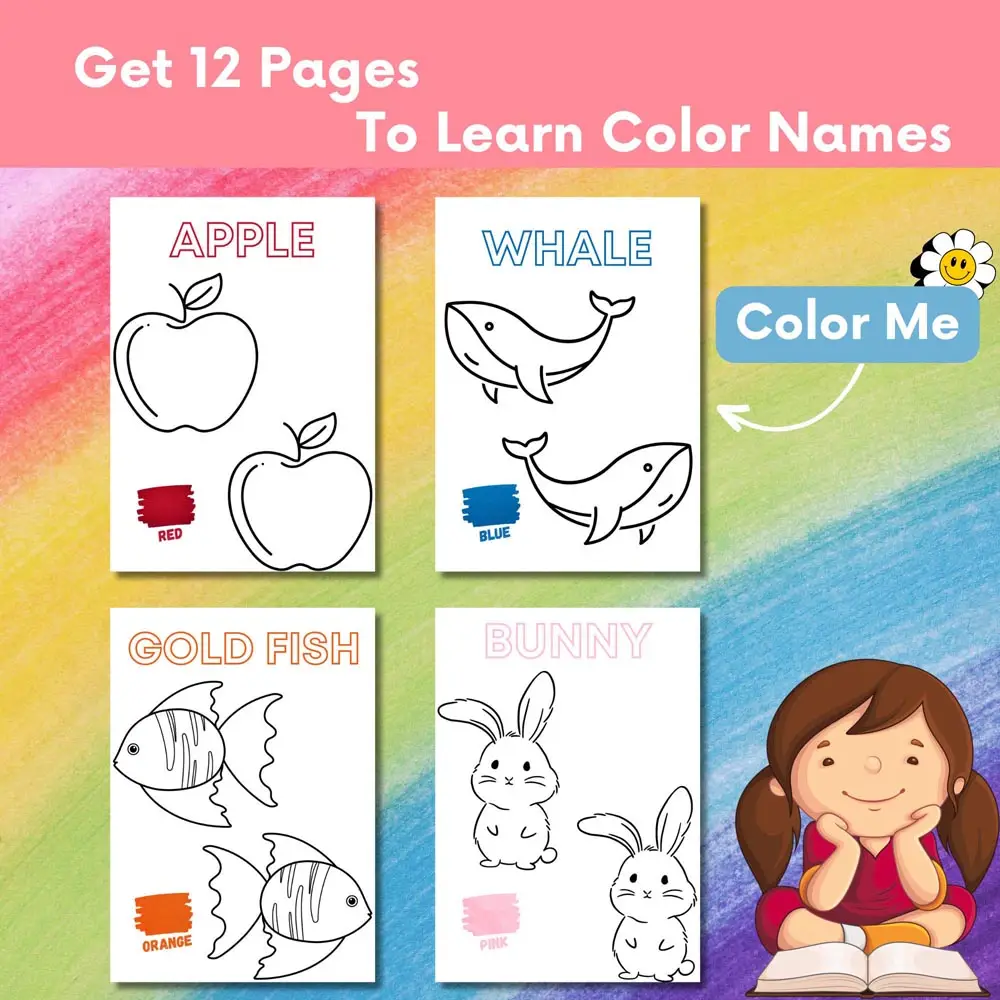
Activities like learn by coloring worksheets allow children to explore colors freely within simple outlines. These worksheets encourage children to color familiar objects, helping them associate specific colors with real life visuals. Parents often observe that children feel proud after completing a coloring page, which builds emotional confidence and a positive attitude toward learning.
Coloring also gives parents an opportunity to sit with their child, talk about colors, and enjoy meaningful interaction without pressure.
Fun Ways to Teach Shapes Using Printable Worksheets
Introducing Shapes Visually Before Practice
Before children can identify or match shapes, they need to recognise them visually. Repeated exposure helps children feel comfortable with basic shapes such as circles, squares, and triangles.
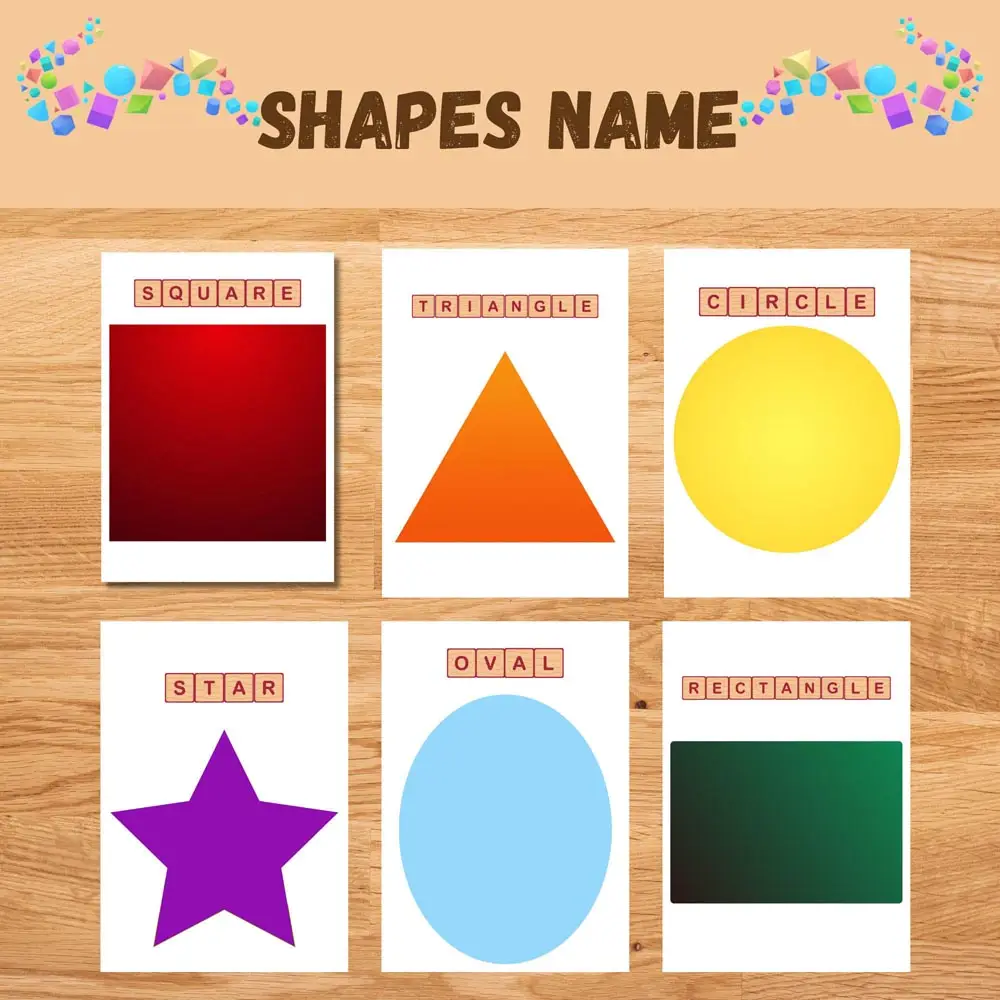
Visual tools like a bright shapes poster for kids work well at this stage. Posters act as constant visual references that children can notice throughout the day without formal instruction. This kind of passive exposure prepares children for more active shape practice later.
Parents often find that children start naming shapes independently after seeing them regularly in their environment.
Strengthening Shape Recognition with Hands on Practice
Once children are familiar with basic shapes, interactive practice helps deepen understanding. Flashcards encourage repetition and allow children to name, compare, and sort shapes confidently.
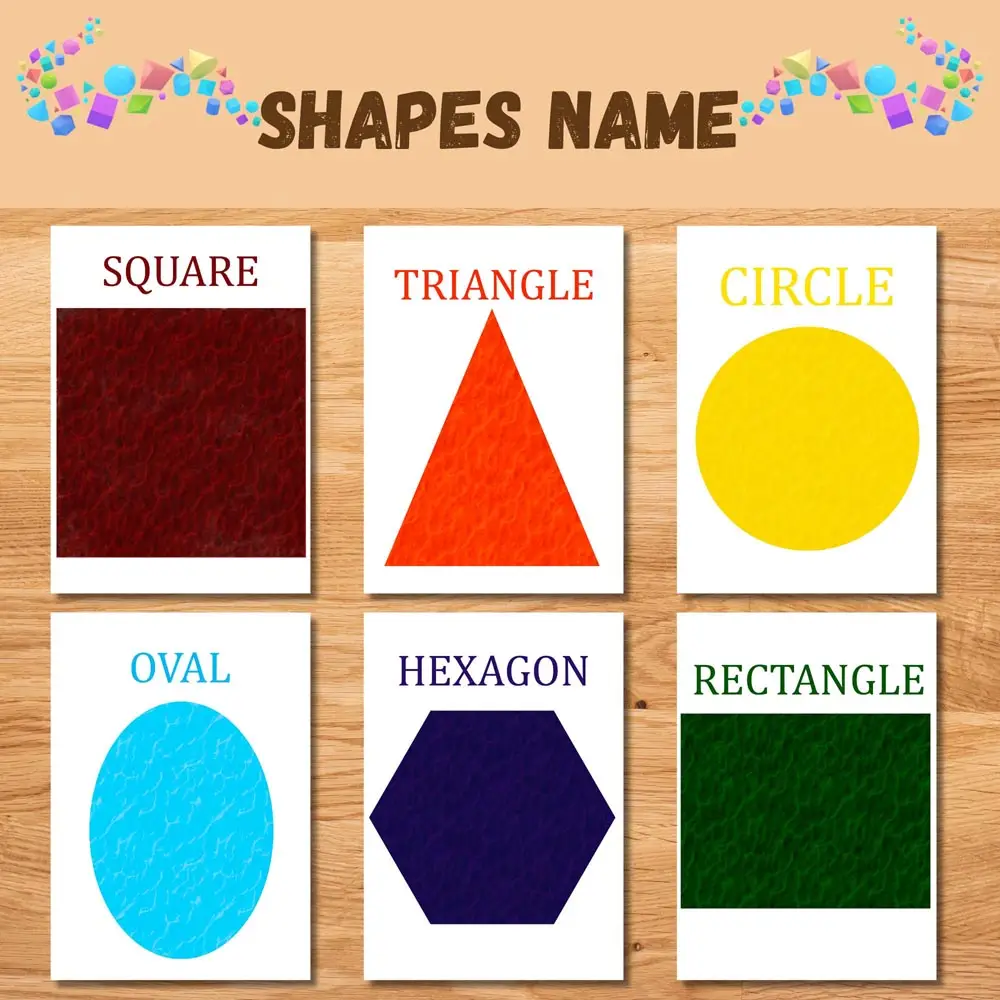
Using shape flashcards for kids makes it easy for parents to turn learning into simple games at home. Children can match flashcards with objects around the house or group similar shapes together during playtime. This improves observation skills, early classification, and visual discrimination.
Making Shape Learning Fun Through Interactive Games
Children learn more effectively when they actively participate. Games transform learning into play and reduce fear of making mistakes. Interactive activities also help children apply what they have learned in a meaningful way.
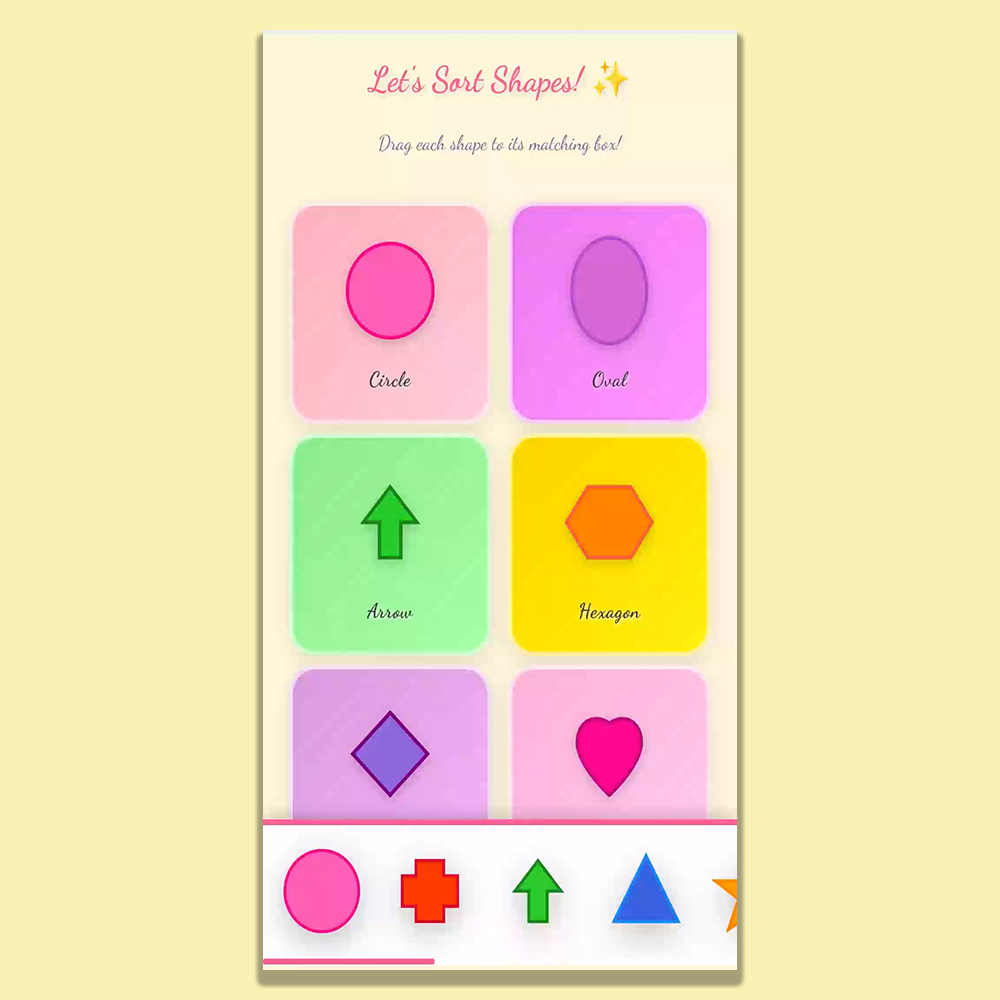
A gentle option for this stage is a shape sorting game for kidsthat uses calm drag and drop interaction. This type of game allows children to match shapes by placing them into correct spaces, supporting problem solving and independent thinking. The simple design helps children focus without distractions, making learning enjoyable and confidence building.
Many parents notice that children willingly return to such games, reinforcing learning through repetition without resistance.
How Printable Worksheets Support Different Learning Styles
Every child learns differently. Some children respond best to visuals, while others enjoy hands on activities. Printable worksheets naturally support multiple learning styles within the same routine.
Visual learners benefit from posters and flashcards. Kinesthetic learners enjoy coloring activities and interactive games. Auditory learners gain more when parents talk through worksheets and name colors or shapes aloud. This flexibility makes printable worksheets suitable for a wide range of children.
Creating a Balanced Learning Routine At Home
Parents do not need long study sessions to see results. Short and consistent activities work best for young learners. A simple routine can include observing colors with flashcards, coloring one worksheet page, reviewing shapes using posters, and playing a short shape matching or sorting game. This balanced approach keeps learning light and enjoyable while building strong foundations over time.
Many parents find that repeating this routine a few times a week feels manageable and helps children stay interested without feeling tired or pressured.
Common Mistakes Parents Should Avoid
Some parents introduce too many concepts at once, which can confuse young children. It is better to focus on one idea and repeat it in different ways. Another common mistake is correcting children too often. Printable worksheets are meant for exploration, not perfection. Allowing children to make mistakes helps them learn naturally and build confidence.
Patience and consistency matter more than speed at this stage.
Conclusion
Teaching colors and shapes does not need to feel stressful or complicated. With the right printable worksheets and gentle interactive activities, parents can create a calm and enjoyable learning environment at home. By combining visual tools, coloring activities, flashcards, and simple games, children learn naturally and confidently.
Printable worksheets support early learning in a way that feels flexible, emotionally supportive, and engaging, helping children enjoy every step of their learning journey while building strong foundations for the future. With the right balance of worksheets, flashcards, and games, it becomes easier to teach colors and shapes to kids in a calm and engaging way. To make this easier, start with one color set and one shape set, and keep practice sessions short and consistent. Using colors and shapes printable worksheets consistently helps children build recognition and confidence without making early learning feel stressful.
Frequently Asked Questions
Yes. Printable worksheets provide structured yet flexible learning that helps children understand concepts through repetition and play.
Most children begin recognising colors and shapes between two and four years, depending on individual readiness.
Yes. Interactive games help children apply learning while improving focus and problem solving skills.
Short daily or alternate day sessions are more effective than long or irregular practice.