

How Do Animal Name Learning Worksheets Make Early Education More Engaging?
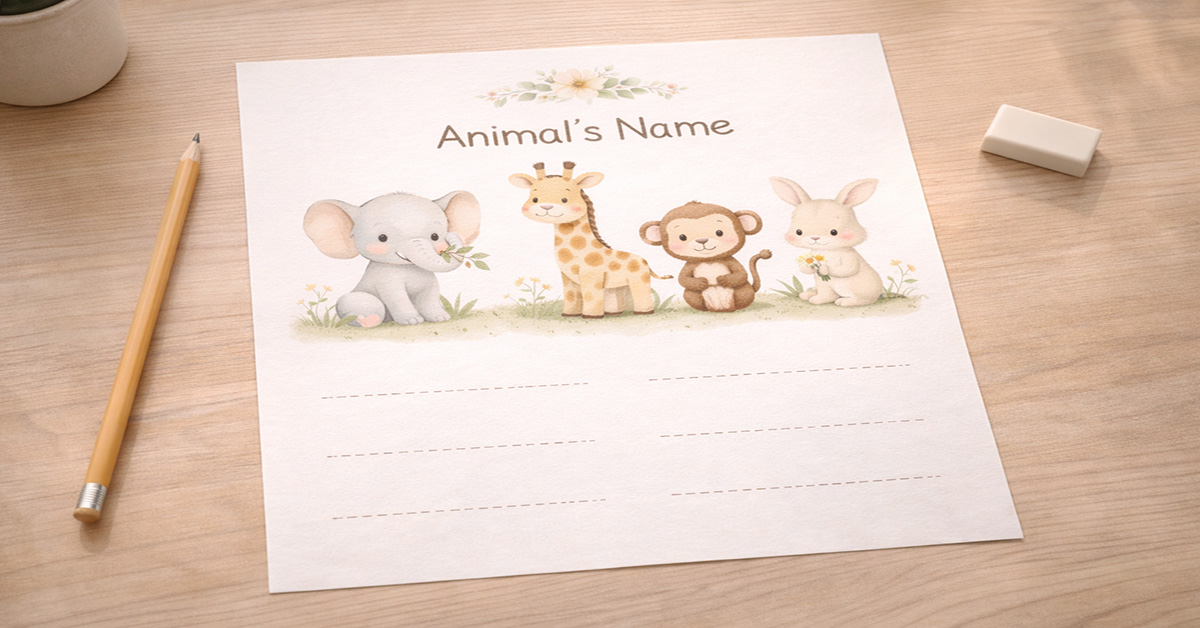
Early education becomes most effective when learning feels natural, familiar, and emotionally safe for young children. At an early age, children respond best to visuals, repetition, and subjects they already recognize. This is why animals play such an important role in foundational learning. Animal name learning worksheets help children connect familiar visuals with structured language in a calm and engaging way, making early education both meaningful and confidence building.
Animals are often one of the first things children recognize through storybooks, toys, and everyday conversations. When animal names are introduced through structured worksheets, learning feels comfortable rather than overwhelming. Children are encouraged to observe, identify, and remember without feeling pressured, which makes early education both engaging and meaningful. You can also browse our Educational Templates collection for more screen-free early learning resources.
Why Animals are a Natural Starting Point for Early Learning
Animals already exist in a child’s world long before formal education begins. Children hear animal names in bedtime stories, see them in picture books, and recognize them through sounds and actions. This familiarity creates instant interest and emotional comfort.
When a child sees an animal on a worksheet, there is no fear or hesitation. The subject already feels known and friendly. This emotional safety allows learning to happen smoothly. Instead of struggling with something unfamiliar, children can focus on recognizing and remembering animal names.
Animals also support early thinking skills. As children recognize different animals, they naturally observe visible differences such as how animals look, their general size, and unique features. These simple observations help build attention to detail, comparison skills, and curiosity, which support early cognitive development.
How Animal Name Learning Worksheets Increase Engagement
Visual Association That Strengthens Memory
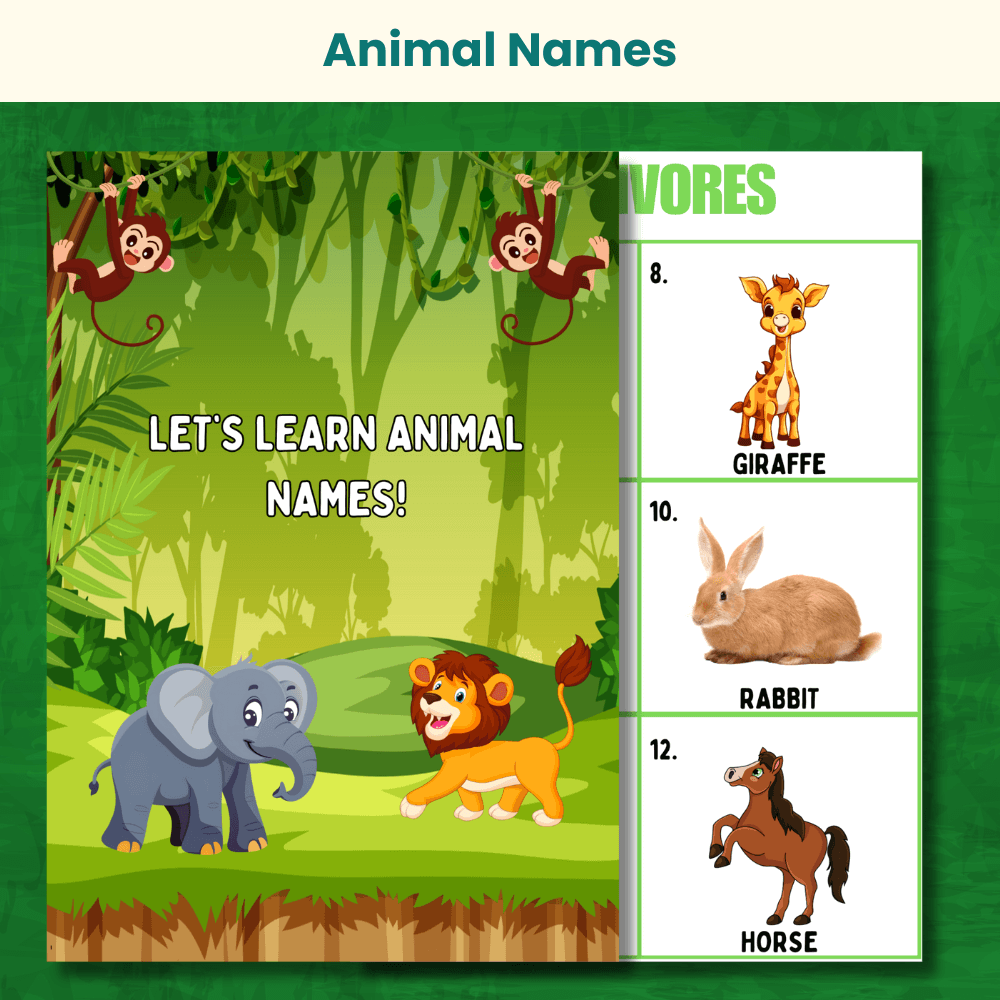
Young children are visual learners. They understand images before they understand written words. Animal worksheets use clear illustrations paired with readable text, helping children connect visuals with language. When the same animal and name appear repeatedly, the brain forms strong memory connections.
This visual association improves word recognition and recall over time. Children begin to identify animals quickly and remember their names without help. This is one of the key reasons animal name learning worksheets support early reading readiness without formal instruction.
Learning Without Stress or Performance Pressure
Early learning should never feel like testing. Animal worksheets focus on recognition rather than evaluation. Children are free to explore images, repeat names, and learn at their own pace. There is no pressure to perform or fear of making mistakes.
This stress-free learning environment builds confidence. Children who feel safe while learning are more willing to participate, repeat activities, and stay engaged for longer periods. This positive experience shapes a healthy attitude toward education from the very beginning.
Supporting Early Language Development
Animal names are practical vocabulary words that children can immediately use in daily conversations and play. Worksheets help children recognize spellings, associate words with images, and develop pronunciation awareness when guided by adults.
Using animal name learning worksheets regularly supports vocabulary growth in a natural and age-appropriate way. Children often begin using these words in storytelling and pretend play, which further strengthens language confidence.
Theme-Based Learning Encourages Curiosity
Many animal worksheets follow a jungle or nature theme. Theme-based learning keeps children engaged because everything feels connected. Instead of random activities, children feel like they are exploring a familiar world.
This sense of exploration keeps curiosity alive. Curious children observe more closely, ask more questions, and stay interested in learning activities for longer durations. This sustained engagement is crucial for early education success.
How Repetition Through Worksheets Strengthens Learning
Repetition plays a key role in early childhood education. Young children do not always learn a new word the first time they see it. Animal name worksheets allow children to revisit the same visuals and words multiple times in a gentle and familiar format.
When children repeatedly see the same animals and names, recognition becomes faster and more confident. Over time, children no longer need prompts to identify animals, which shows real learning progress. This repeated exposure also helps children feel successful, encouraging them to stay motivated.
Worksheets make repetition feel natural rather than boring. Because animals are familiar and enjoyable, children are more willing to engage with the same content again, strengthening both memory and confidence.
Supporting Different Learning Styles in One Resource
Every child learns differently. Some children respond best to visuals, some need repetition, and others enjoy observing details. Animal worksheets naturally support all these learning styles.
Visual learners benefit from illustrations, repetition-based learners gain confidence through recurring animal names, and observational learners enjoy identifying animals and noticing differences. This flexibility makes animal worksheets suitable for a wide range of learners.
Printable Worksheets and Parent-Led Learning
Printable learning resources give parents full control over learning routines. Worksheets can be used during short sessions, quiet time, or revision without relying on screens. Parents can adjust the pace according to the child’s comfort level.
Well designed animal name learning printables help children connect words with visuals in a calm, screen-free way while allowing parents to guide learning naturally. Printable worksheets can also be reused, strengthening memory through repetition.
How These Worksheets Support Early Education Goals
Early education focuses on more than memorizing words. It aims to develop attention span, observation skills, confidence, and learning habits. Animal worksheets encourage children to sit, focus, and complete small tasks independently.
Structured animal name learning worksheets support early education by improving word recognition and focus without pressure. Over time, children become comfortable with structured activities, which supports preschool and kindergarten readiness.
How Animal Worksheets Encourage Parent-Child Interaction
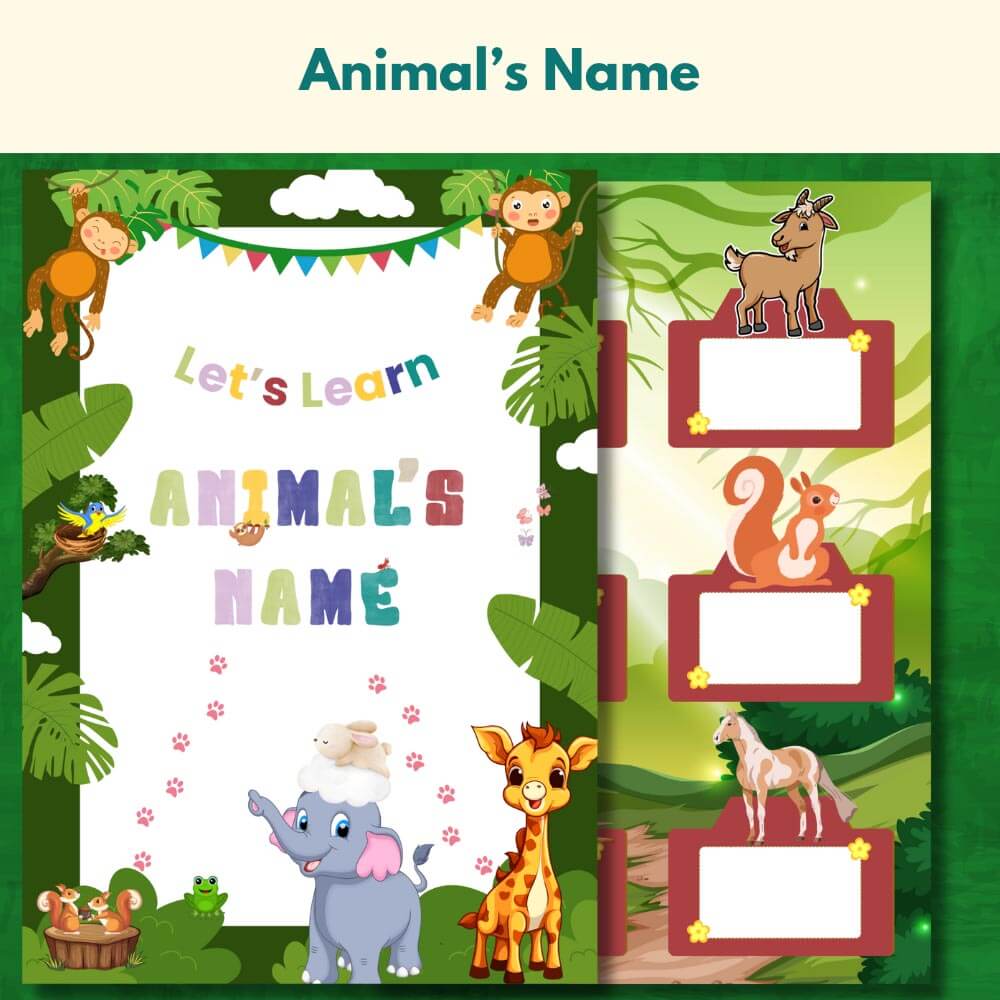
One of the biggest benefits of animal name learning worksheets is the opportunity they create for meaningful parent-child interaction. Unlike screen-based activities, worksheets invite conversation and shared learning moments.
Parents can sit with children, ask simple questions, and encourage them to name animals aloud. This interaction improves listening skills, speaking confidence, and emotional bonding. Children also feel more supported when learning becomes a shared activity rather than a solo task.
These moments help children associate learning with positive attention and encouragement. Over time, this builds a healthy learning mindset that supports long-term educational growth.
Conclusion
Early education becomes most effective when learning feels familiar, enjoyable, and pressure-free. Animal name learning worksheets create this environment by combining engaging visuals, structured learning, and natural exploration. They help children build vocabulary, confidence, attention span, and school readiness in a supportive way.
By introducing learning through animals, parents and educators can create a strong foundation that supports long-term educational success while keeping the learning experience positive and engaging.
To make this easier, start with one printable set, keep sessions short, and repeat the same animals for a few days.
Frequently Asked Questions
Yes. With parental guidance, animal name learning worksheets are suitable for toddlers because visuals are familiar and learning remains gentle.
Ten to fifteen minutes a few times a week is enough to keep children engaged without causing fatigue.
No. They also support observation skills, memory development, attention span, and early learning discipline.
Printable worksheets reduce distraction and support focus. Many parents prefer them for screen-free early learning.
Yes. Repetition strengthens recall and confidence. Children often learn faster when content is revisited.