

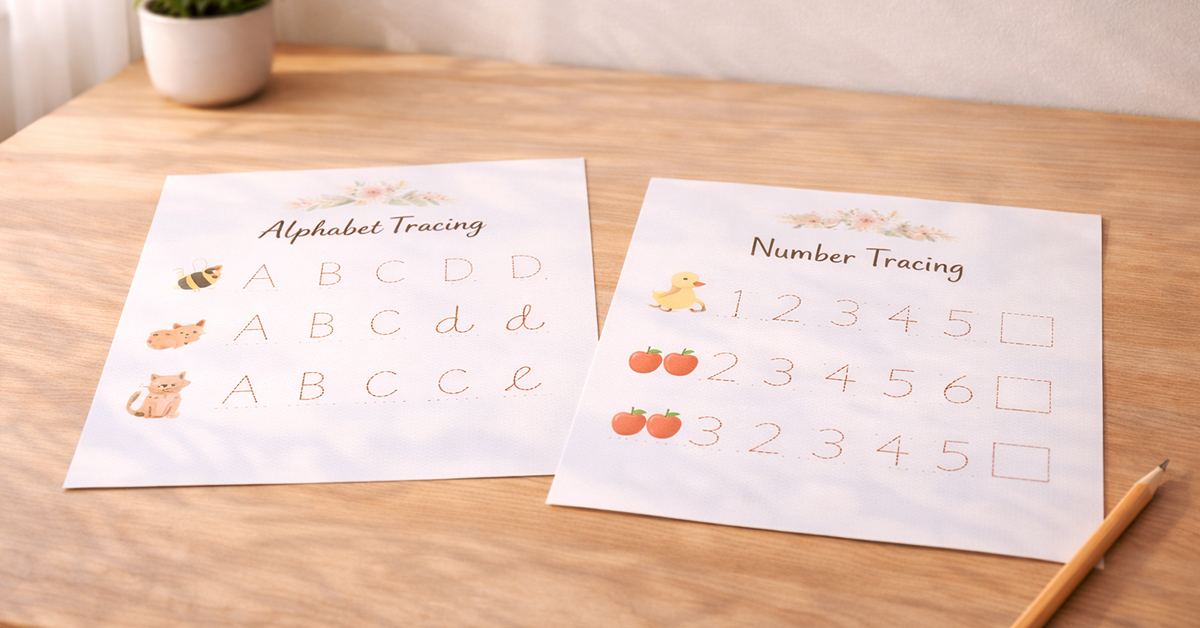
How Do Alphabet and Number Tracing Worksheets Help Build Early Writing Confidence?
Early writing confidence does not begin with children writing full words or sentences. It starts much earlier, with how comfortable they feel holding a pencil, following shapes, and understanding basic stroke movements. For many parents teaching at home, this early stage often brings confusion. Children may show interest in writing but hesitate, feel frustrated, or avoid practice altogether.
This is where alphabet and number tracing worksheets play an important role. They provide children with a gentle, structured introduction to writing without pressure. Instead of expecting perfect results, tracing allows children to explore writing movements slowly and confidently. This blog explains how alphabet and number tracing worksheets help build early writing confidence and why they are often the most trusted starting point for young learners at home.
Why Early Writing Confidence Matters More Than Early Writing Results
Writing Confidence Comes Before Writing Skills
Before children can write independently, they need to feel safe and capable while using writing tools. Confidence develops when children experience success without fear of mistakes. When writing feels too difficult too early, children may lose interest or feel anxious.
Tracing worksheets focus on readiness rather than performance. They guide children through writing motions in a supportive way, allowing confidence to grow naturally before accuracy becomes important.
Emotional Comfort Supports Learning At Home
At home, children learn best when they feel relaxed and supported. Tracing activities reduce comparison and correction, helping children focus only on their own progress. This emotional safety is a key reason why tracing worksheets are widely recommended for early writing development.
How Alphabet Tracing Worksheets Support Writing Confidence
Understanding Letter Formation Step by Step
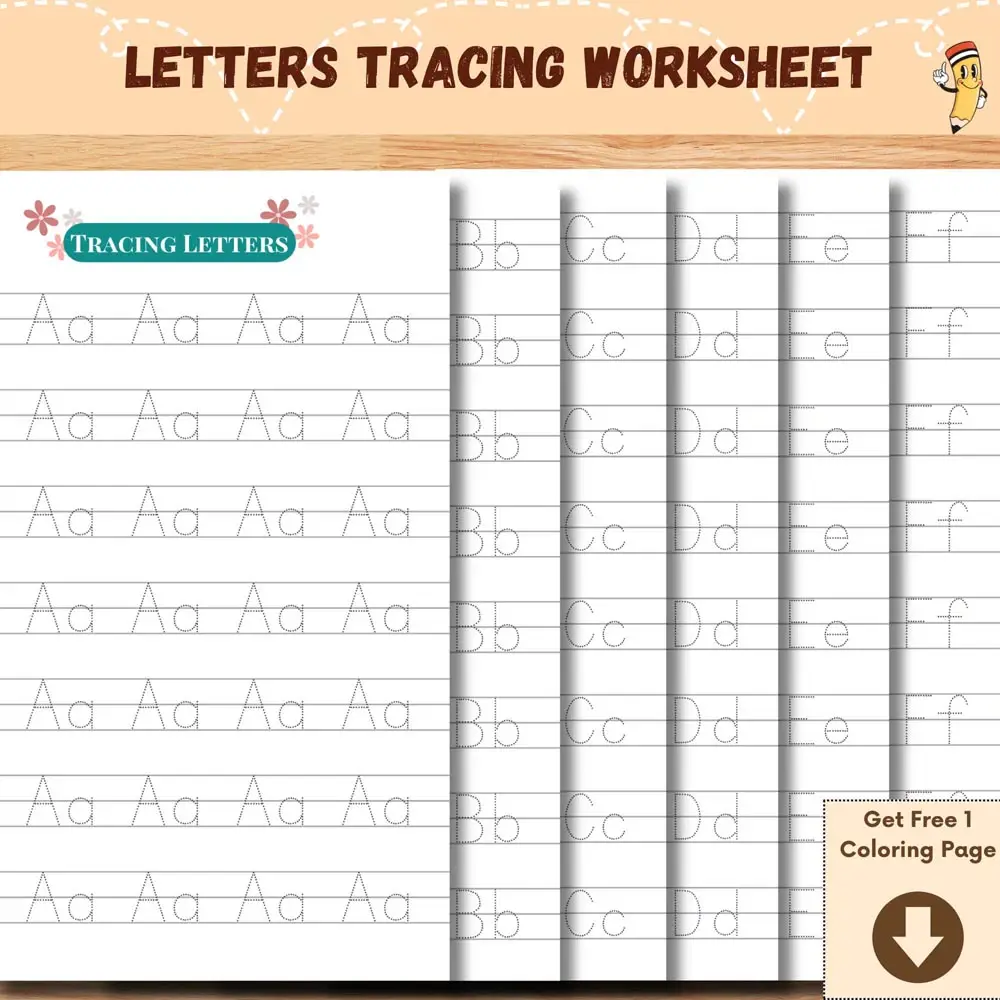
Alphabet tracing introduces letters in a structured and predictable way. Children see how each letter is formed and follow guided lines that show correct strokes. This removes confusion and guesswork.
When children trace letters repeatedly, they begin to understand letter shapes naturally. This familiarity builds confidence because letters no longer feel unfamiliar or intimidating.Parents often notice that children who practice with alphabet tracing worksheets feel more comfortable attempting letters on their own later, even without guidance.
Building Muscle Memory Through Repetition
Repetition plays a major role in early writing confidence. Tracing allows children to repeat the same letter movements until they feel natural. Over time, this repetition builds muscle memory in the fingers and hands.
As movements become easier, children feel more in control. This sense of control directly improves confidence and reduces hesitation during writing tasks.
You can see this progression clearly with structured resources like alphabet tracing worksheets, where letters are introduced gradually and practice feels calm rather than overwhelming.
How Number Tracing Worksheets Strengthen Early Writing Confidence
Writing Numbers Feels Less Intimidating with Guidance
Numbers require controlled strokes, curves, and straight lines, just like letters. For children, learning how numbers are written can feel confusing without guidance.
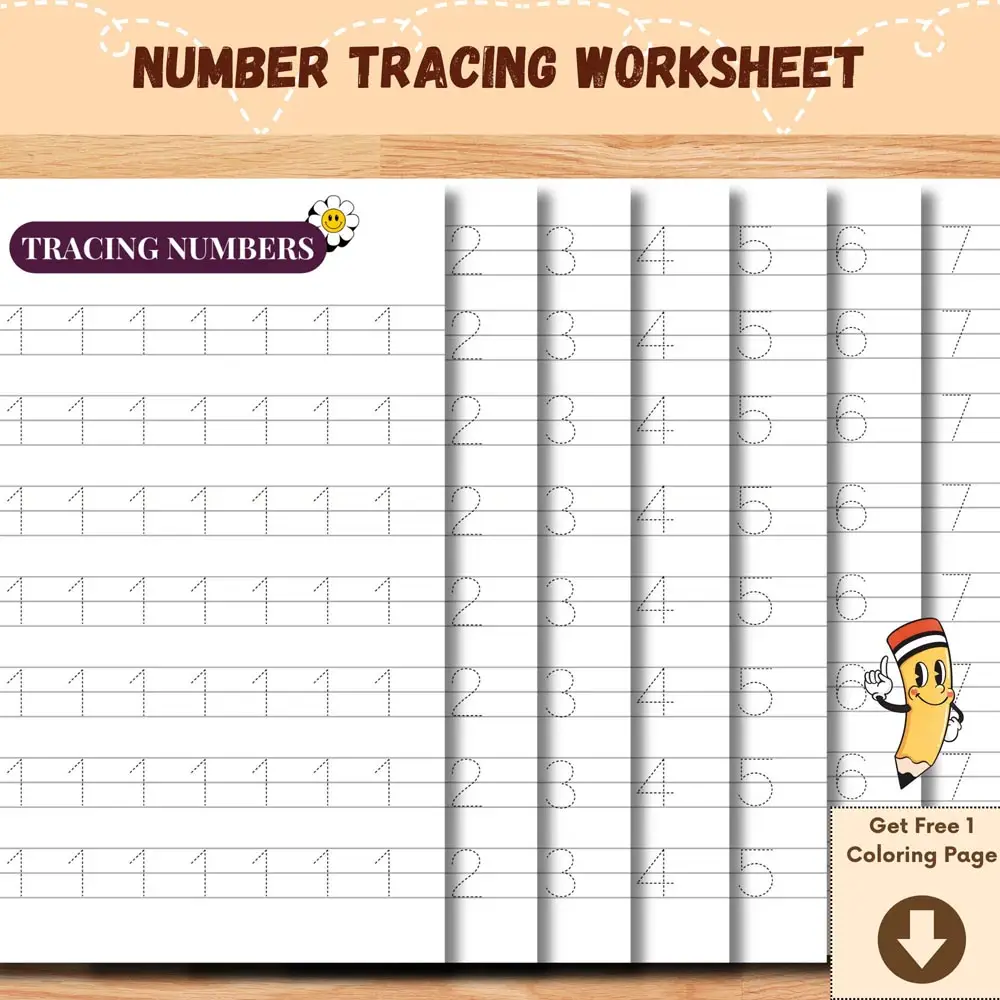
Number tracing worksheets break this process into manageable steps. Children trace numbers along guided paths, helping them understand how each number is formed without pressure.
This guided approach makes numbers feel familiar and approachable, which builds confidence in early writing routines.
Supporting Structured Thinking and Focus
Tracing numbers also supports sequencing and order. Children learn to follow a clear start and finish, which improves focus and attention during writing activities.
Resources like number tracing worksheets help children feel confident not only in writing numbers but also in understanding structured writing flow. This confidence often transfers to other writing tasks later on.
Why Tracing Builds Confidence Better Than Free Writing At Early Stages
Reducing Fear of Mistakes
When children are asked to write freely too early, they may worry about making mistakes. Tracing removes this fear by providing a clear guide to follow.
Because the outcome is predictable, children feel safe attempting the activity. This sense of safety encourages participation and builds positive associations with writing.
Creating Early Success Experiences
Every completed tracing page gives children a sense of achievement. These small successes matter. They help children believe that writing is something they can do.
Confidence grows when children experience progress without frustration. Tracing worksheets are designed to create these positive early experiences.
How Tracing Supports Fine Motor Development and Control
Strengthening Hand and Finger Coordination
Writing requires fine motor control, which develops over time. Tracing activities gently strengthen the muscles used for writing without strain.
As children gain better control over their hand movements, writing feels easier. This physical ease plays a big role in writing confidence.
Improving Pencil Grip and Stability
Consistent tracing practice helps children learn how to hold a pencil correctly and apply appropriate pressure. This stability makes writing tasks feel less tiring and more manageable.
When writing feels physically comfortable, children are more willing to practice, which further builds confidence.
How Parents Can Use Tracing Worksheets Effectively At Home
Keep Practice Short and Consistent
Short daily sessions are more effective than long practice periods. Five to ten minutes of tracing each day is enough to support progress without causing fatigue. If you want ready-to-use pages, browse our Tracing Worksheets category and choose the level that fits your child.
Consistency helps children feel familiar with the routine, which builds confidence over time.
Focus on encouragement, Not Correction
Praise effort rather than perfection. Let children know that trying is more important than staying within lines.
This supportive approach helps children feel confident and motivated to continue practicing.
When Children Start Transitioning From Tracing to Writing
Gradual Independence Builds Confidence
Once children feel comfortable tracing, they naturally begin attempting letters and numbers on their own. This transition feels smoother because tracing has already built familiarity and control.
Children who start with tracing often show more willingness to write independently, even if their writing is not perfect at first.
Writing Feels Achievable, Not Stressful
Because tracing removes early pressure, children approach independent writing with confidence rather than fear. Writing becomes a positive activity instead of a stressful one.
Why Alphabet and Number Tracing Work Best Together
Alphabet tracing builds familiarity with letters, while number tracing supports control and sequencing. Together, they create a balanced foundation for early writing.
Using both allows children to develop confidence across different writing forms, making the overall learning experience more complete and effective.
Conclusion
Early writing confidence grows when children feel comfortable, capable, and supported. Alphabet and number tracing worksheets provide a gentle starting point that respects a child’s pace and readiness.
By focusing on guided movement, repetition, and emotional safety, tracing worksheets help children build confidence before they are expected to write independently. This foundation makes future writing experiences calmer, more enjoyable, and more successful.
That is why alphabet and number tracing worksheets continue to be one of the most effective tools for building early writing confidence at home. To make this easier, start with short daily practice and choose a printable set that matches your child’s stage.
Frequently Asked Questions
Yes. They are ideal for beginners because they focus on guided practice rather than independent writing.
Short daily practice sessions are more effective than irregular or lengthy sessions.
No. They prepare children for handwriting by building confidence, control, and familiarity first.
Most children can begin basic tracing activities once they show interest in holding a pencil and following lines.